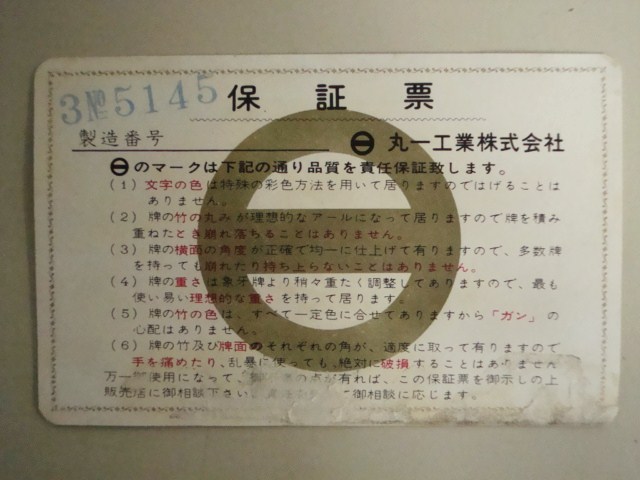
Mizuno Corporation, legally 美津濃株式会社, Mizuno Kabushiki-gaisha, is a sports equipment manufacturer founded in Suminoe, Osaka in 1906. Founded by Rihachi Mizuno and his younger brother Rizo, the shop sold Western-world goods including baseballs, golf clubs, and made-to-order athletic wear.
It is unclear when exactly Mizuno began producing tiles under the brand name Maruichi, but by the 60s they were considered to be the largest manufacturer of riichi sets in Japan.
See the full database of known sets at the mahjong tile wiki.
Notable Features
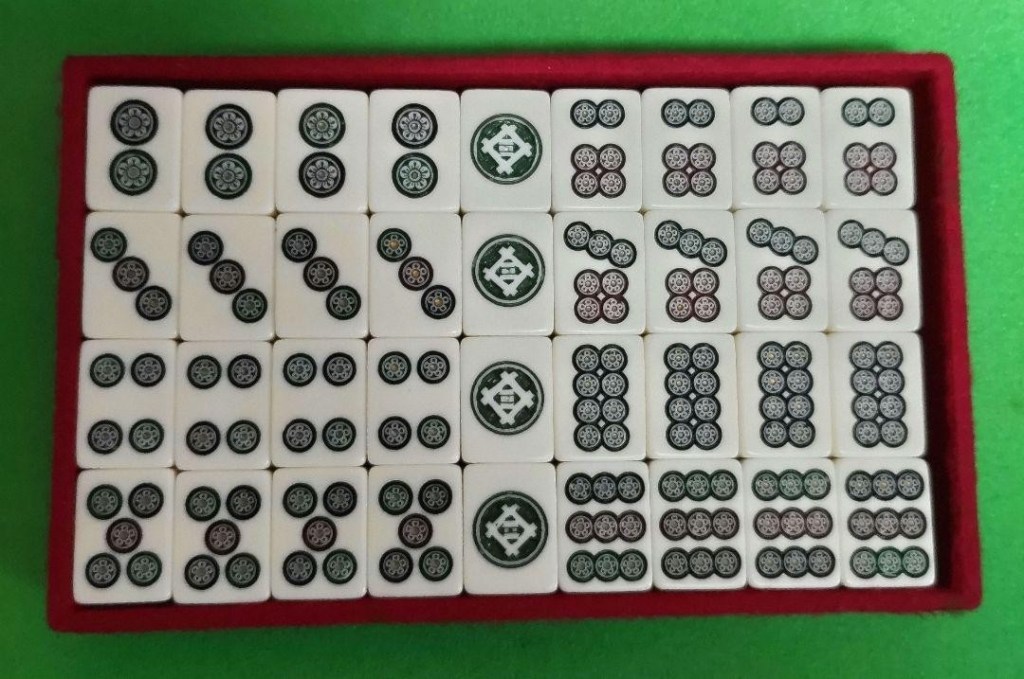
Maruichi tiles are recognized for consistent, superior quality. They are often smaller, dense, and weighty, with an ivory color rather than pure white. Older tiles often have take (bamboo) backs and 3 color pinzu, as well as a lose relic of early Japanese mahjong—the “zero” honor tile.
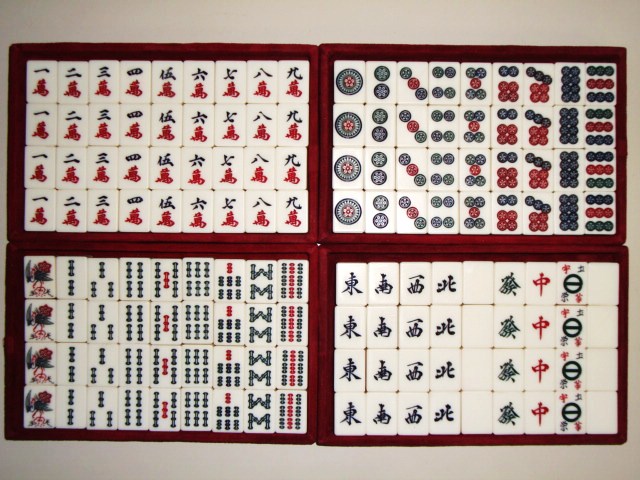
Researchers at the Japan Playing Card museum are uncertain if this zero tile was imported from Shanghai mahjong, or if it was a native invention, but in Maruichi sets this zero tile takes the form of the company’s distinctive bisected circle logo. If you set has this tile, then you can be sure it was produced before 1975.
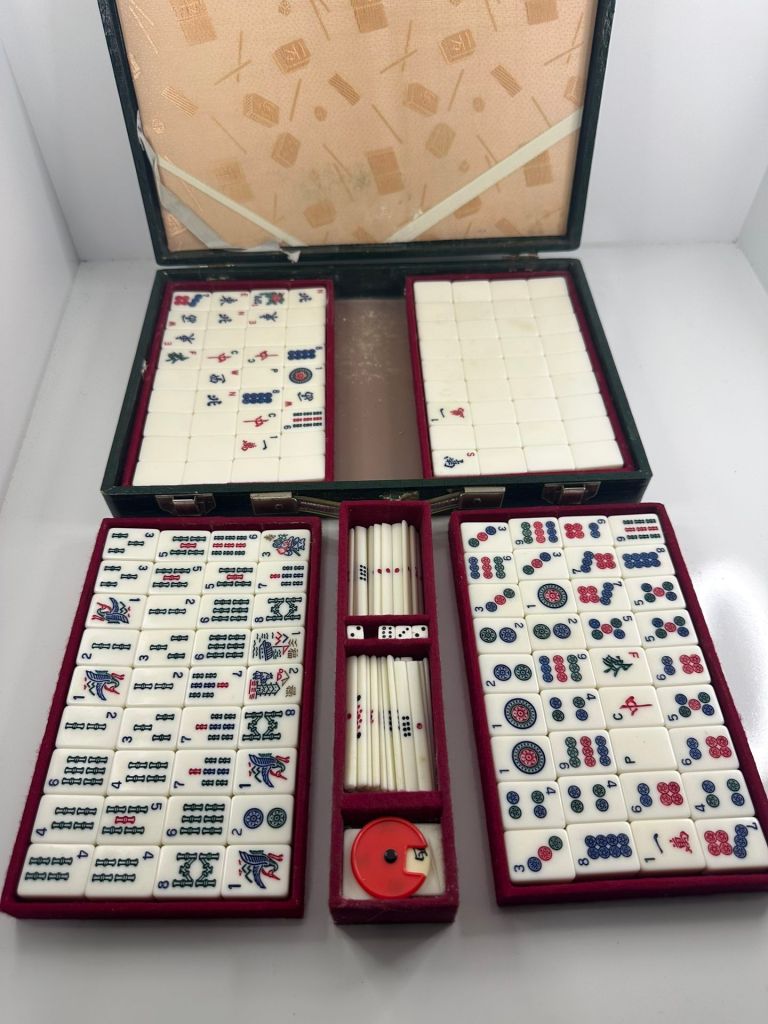
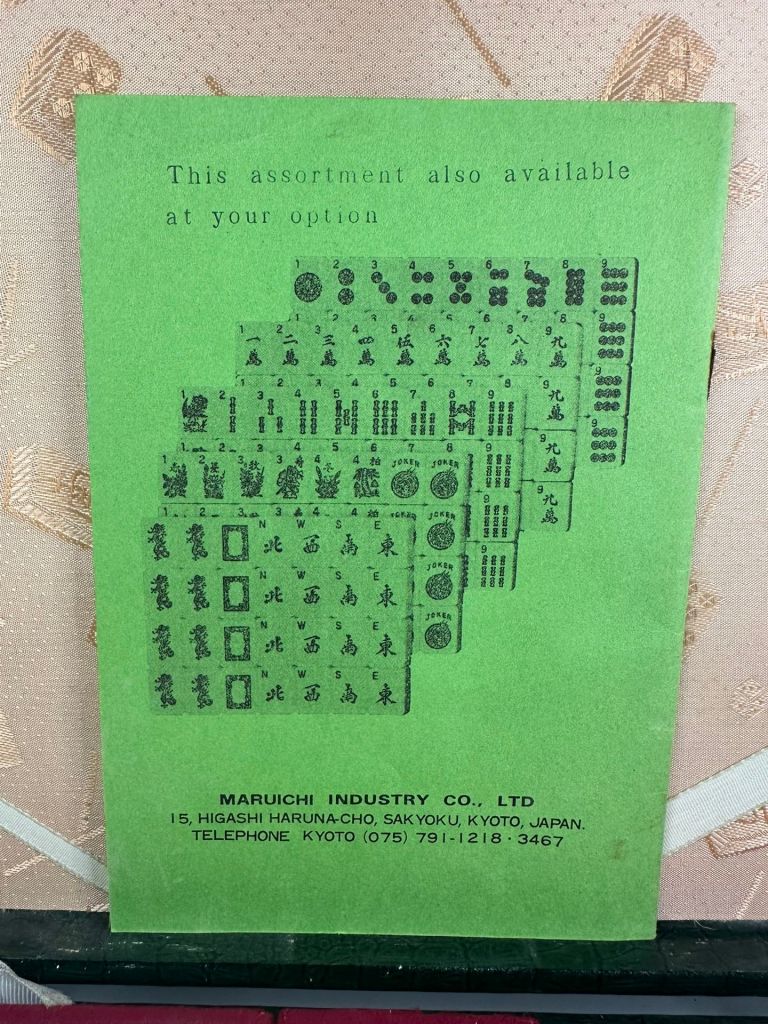
Mizuno Maruichi was also one of the first Japanese manufacturers to produce sets explicitly for export. Here is a set old enough to have 3 color pinzu, but also Arabic numerals and an English language manual. Not the advertisement on the back of the manual for a full-on American Mahjong set with Jokers, produced by Maruichi.
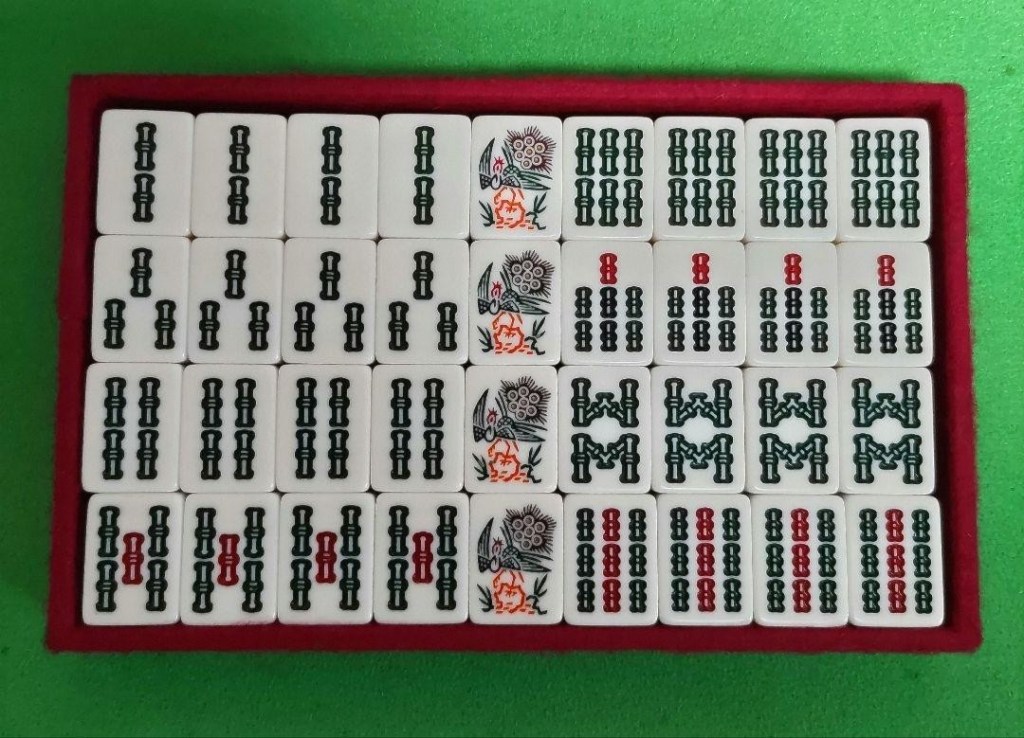
Pre-1970s Maruichi sets also have a unique bird design for the 1sou, which makes them easy to spot. As with other Japanese tile makers, we see the colors gradually darken over time, and the green disappears from the pinzu suit, as we see with this high-end set from the late 1950s.
In the late 1970s, Red Dora started to become more popular, starting with 2 red 5pins, and later expanding to the full range we know today.
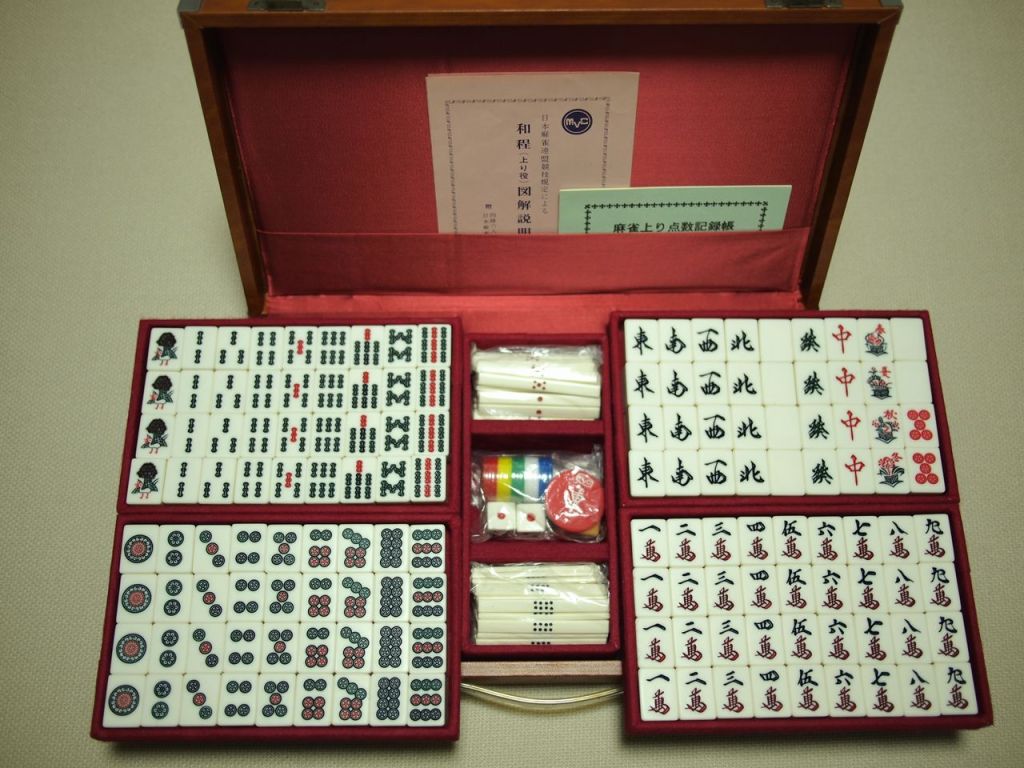
This 1970s set shows the reduction of pinzu to 2 colors, while keeping manzu in Kansai font and adding just the two red 5pins. Also, abandoning their traditional flowing bird for the boxier Nintendo style 1sou, which is a bit odd.
And then by the 1980s, we have the full range of aka dora. Here are two sets from the period, one with bamboo backs and the other with urea resin.
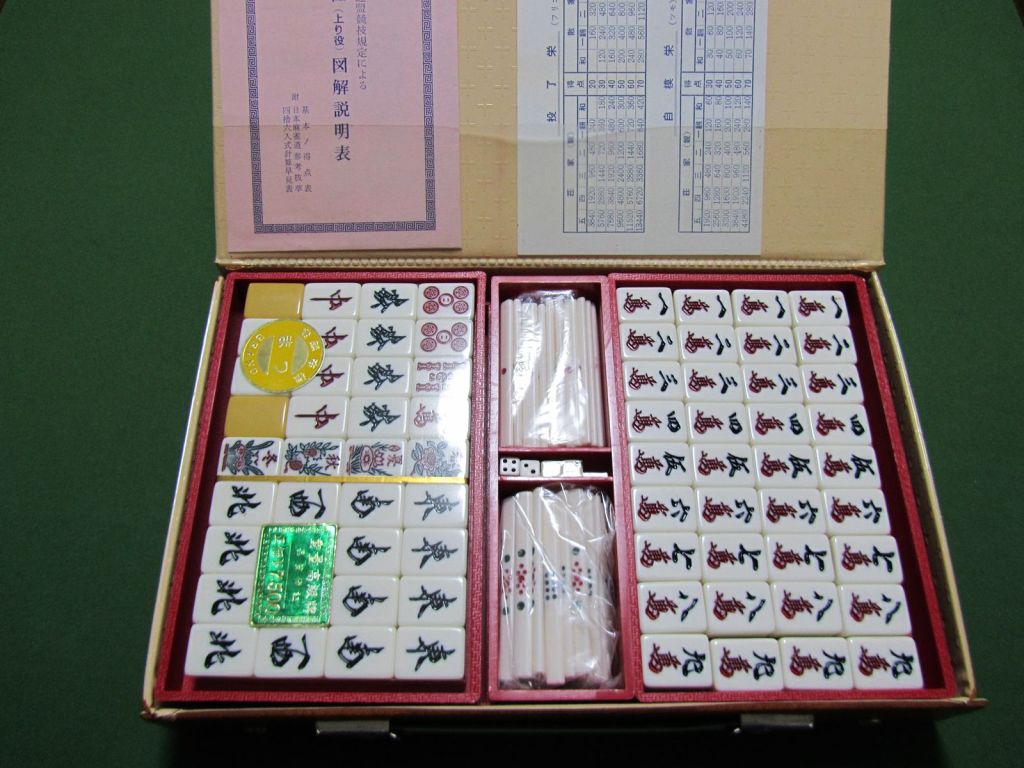
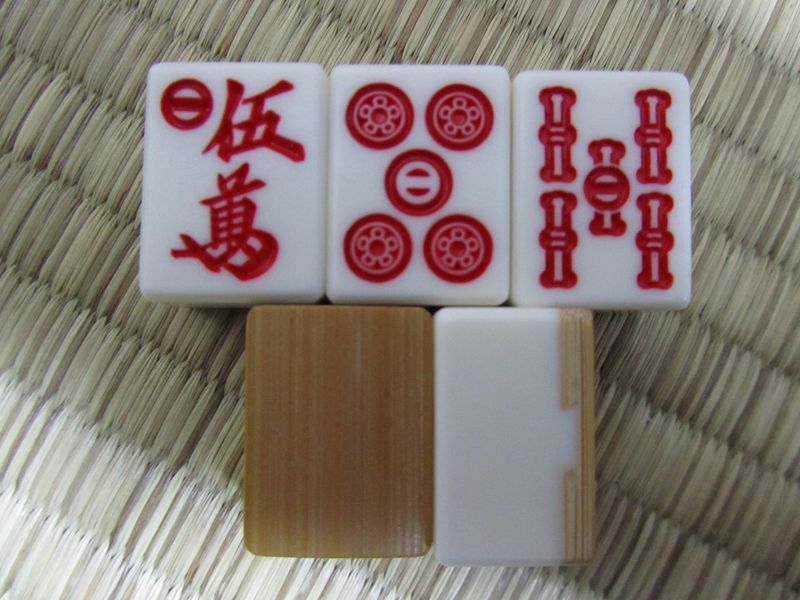
However, these hidden logos are not the be-all-end all. At some point after the 1990s, Maruichi was bought out by Taiyo Chemical (producer of AMOS), who continued to make sets similar to the old Maruichi lines, but without the distinctive logo.
Here is a set featuring the now-standard Kanto typeface, AMOS style black-green souzi, and logo-free aka dora, but with the traditional Maruichi brand sticker still on the box. So even if your set doesn’t look like a conventional Maruichi set, it may still be one in disguise! I have not been able to find any information on when exactly this buyout happened, but if anyone has a source I would love to learn more about it.
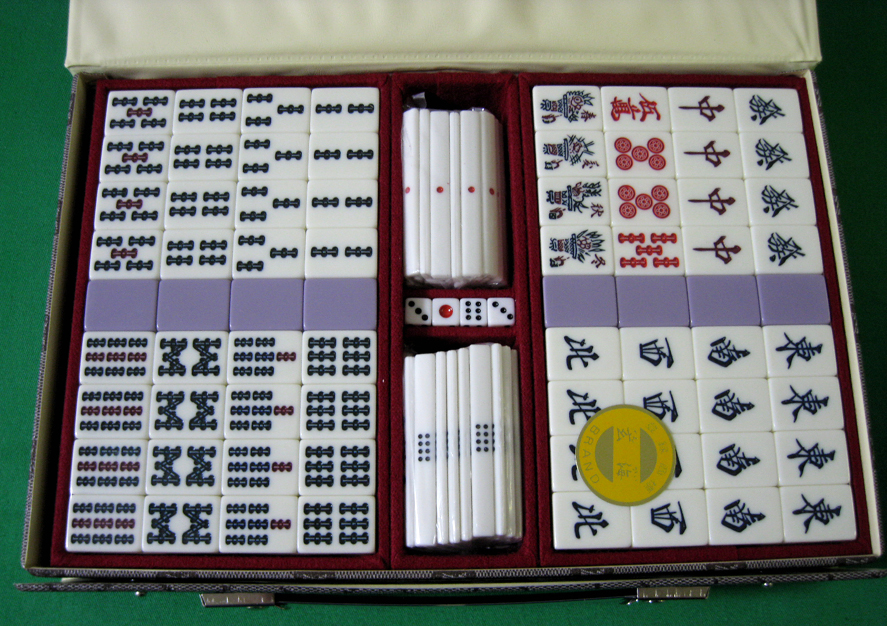
All in all, Maruichi is a solid brand that produced high-quality sets for over 50 years. Whether you are buying a super old Showa Era antique or a more modern aka dora set, it is a brand that you can buy with confidence and enjoy for many years.
 Massachusetts Riichi Mahjong Society