
Kanji: 大洋化学 / アモス
Taiyo Chemicals Corporation, known for its AMOS brand of mahjong products, was established in 1954 in Wakayama Prefecture. Initially specializing in urea resin products, the company began manufacturing and selling mahjong tiles during Japan’s mahjong boom in the 1960s. These tiles were made using the same urea resin technology originally developed for imitation pearls.
The design of these early tiles is very similar to the Maruichi brand, which were the industry leader at the time. The tiles are so similar, that it is difficult to tell the difference if the tiles are not in their original case or with their original manuals. This is further confused by Taiyo Giken’s acquisition of the Maruichi company entirely at some point in the 1990s.
However, AMOS is most known for their innovation and improvement of automatic table technology. They entered the automatic table market in 1988 with the AMOS Mater design, some of which are still in use today.
This kickstarted an era of rapid improvement and re-design from the 1990s to present that has rendered AMOS as the uncontested leader in riichi products. Indeed, modern riichi mahjong is basically inseparable from the image of the Mahjong Soul interface, which mimics a standard AMOS tile set on an AMOS Rex autotable.
Unfortunately, unlike vintage tiles which hold their value and appeal for decades, defunct models and the tiles that go with them are widely regarded as junk. Old tables are simply less functional and reliable than newer ones, which makes them unappealing to most buyers. This makes information on them a little hard to find.
AMOS also has a tendency to re-release the same sets with new names, or to market the same tile design under multiple names with only minor differences. Taken together, these two facts make the phrase “vintage AMOS” basically an oxymoron.
However, as the brand and technology matures, I think interest in older AMOS products as collectables may rise. If that does happen, I hope my efforts in documenting now may help those future collectors identify their finds. 🙂
Size and Weight
All modern AMOS sets come with the same Kanto typeface and limited color range (yellow only, with blue or green for autotable sets). For this reason, the easiest way to classify them is actually by size and weight.
- 28mm heavy (Max)
- 28mm light (Smart aka Masters aka Martel aka Mater…)
- 26mm heavy (Gaban aka Gabin…)
- 26mm light (Monster aka Begin…)
Generally, there will be a low-cost tier and a high-cost tier, and one version with weights and one without. Gabin was the same as Monster, but with a weight. Max and Masters were the same tile, but packaged with different add-on gear.
The unicorn in this system is AMOS Smart, which despite being almost the same size as AMOS Max, has slightly sharper corners and a very slightly more crisp indentations. The Max was discontinued in 2022, so if any of these ends up being collectible, I would expect it to be the Max.
Here is a video review comparing these sets circa 2022.
In general, if the reseller has photos with the tiles in a single large flat drawer (as with these AMOS Ultima tiles below), then they are almost always autotable tiles. If they have a blue or green back, they were autotable tiles.
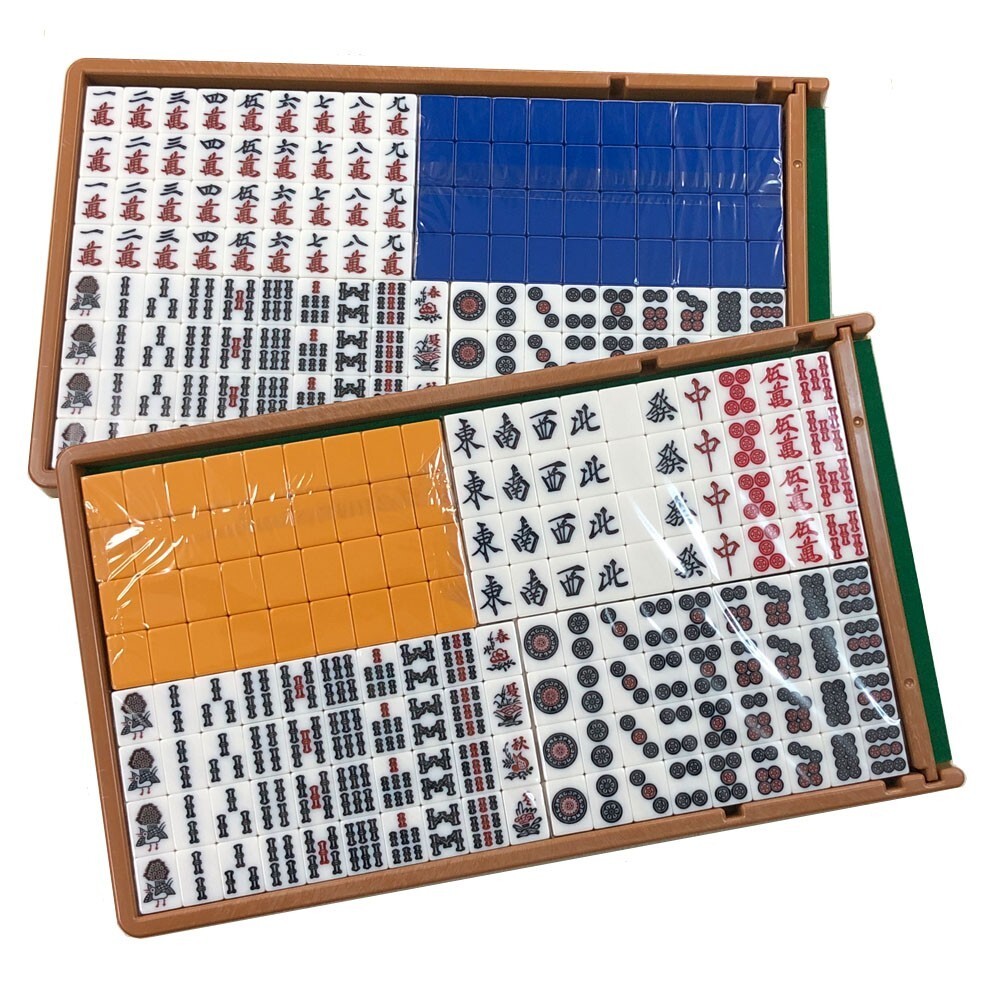
Due to the overwhelming uniformity of AMOS tiles, very few sets really stand out. There are a few holdover Maruichi tilesets from the 1970s and 80s that have unique character. Here is a “Jumbo” Taiyo AMOS set that appears to be from the early 1980s, when the Red Dora rule was just catching on.
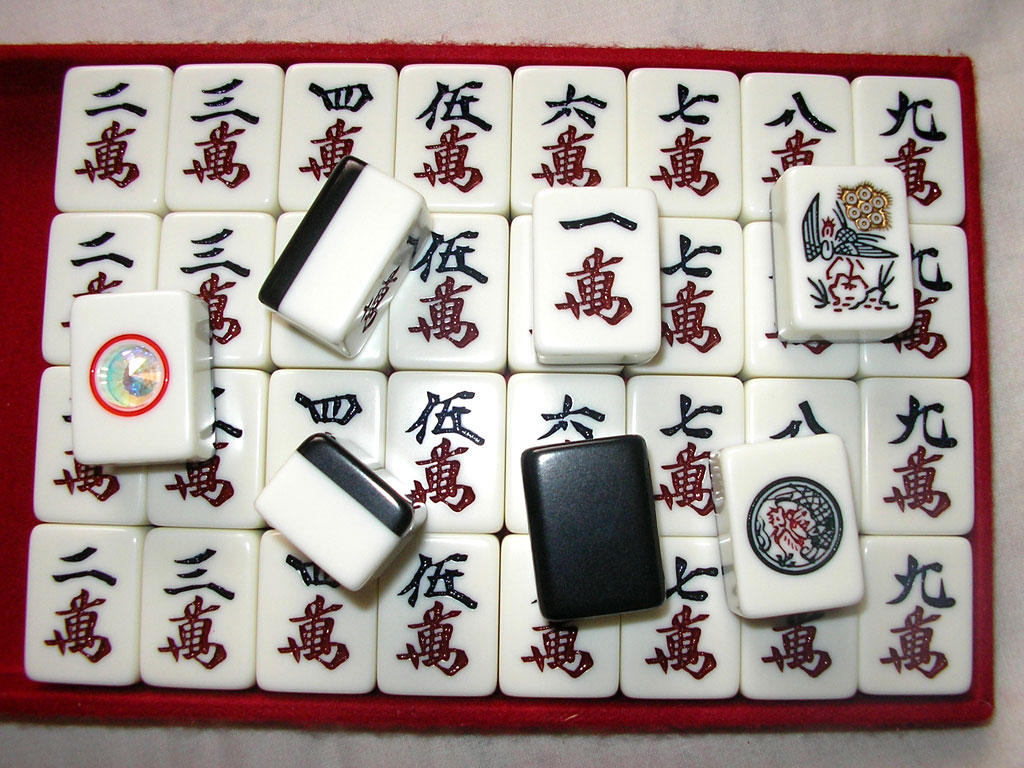
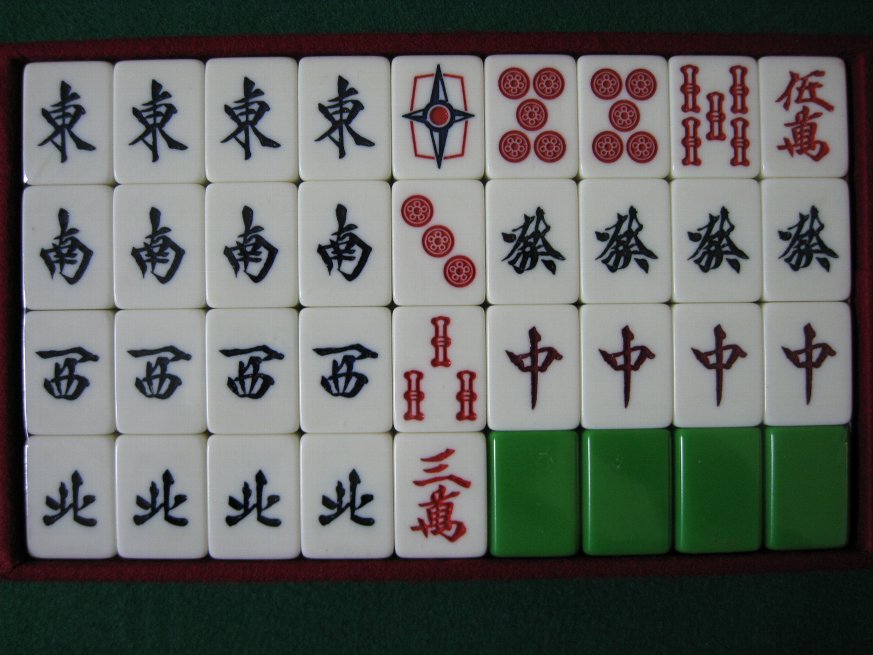
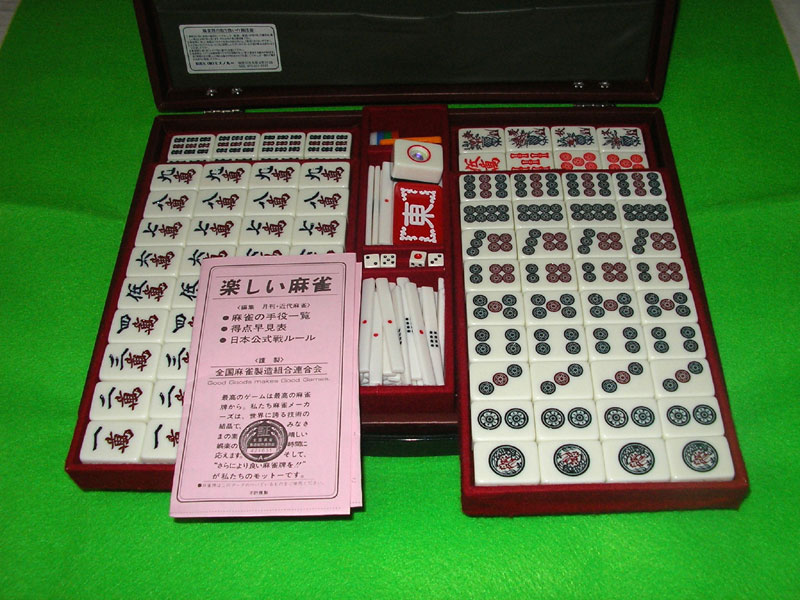
In the first version of aka dora, sets were sold with just the 2 red 5 pinzu. By the mid 80s, this seems to have evolved in in red 5 of each suit. However, in these Jumbo sets, we also see red 3s of every suit as well as a decorative compass tile. Reminds me of the Nintendo sets from that era, which only have red 3s. Note the rare (for Taiyo) green color backs, as well.
In the higher-end Tenwa version of the same set, we also see the classic Maruichi “zero” tile with a diamond embedded. Both sets use the Maruichi Kansai font as well. Very unusual!
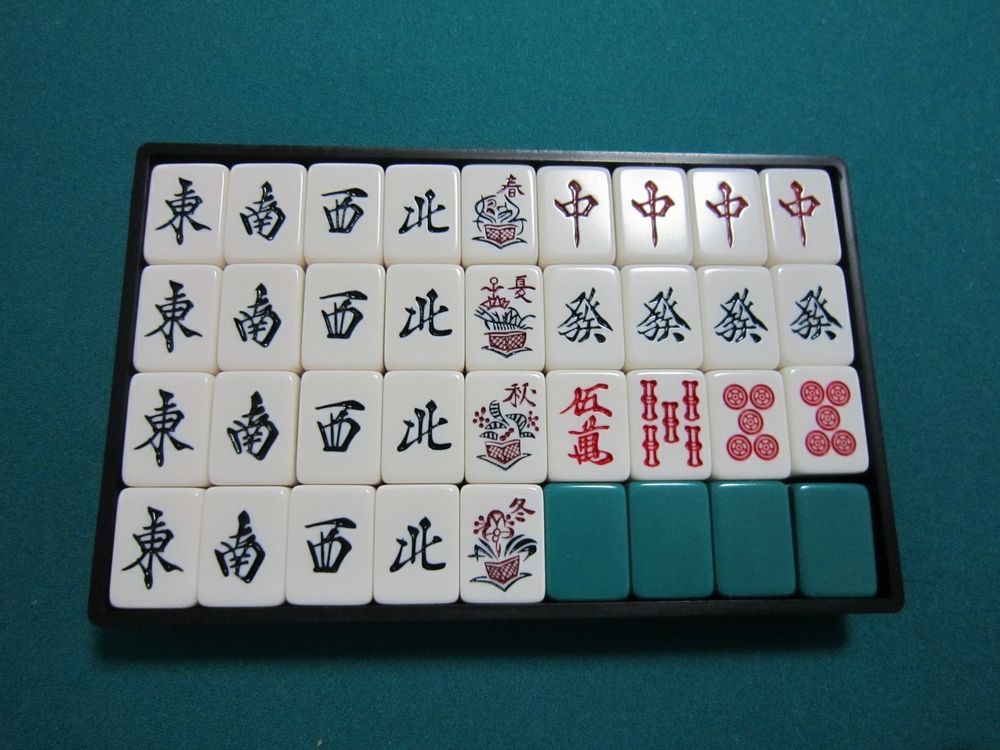
The other notable set, which also seems to be a holdover from the Maruichi merger is this so-called “Nani-wa” or “What??” set. Maruichi had also been selling a teal colored set in the 1960s and 70s. I believe the joke is that the tile backs are colored to perfectly match the teal junk mat, making them somewhat disappear when stacked. Fun gimmick.
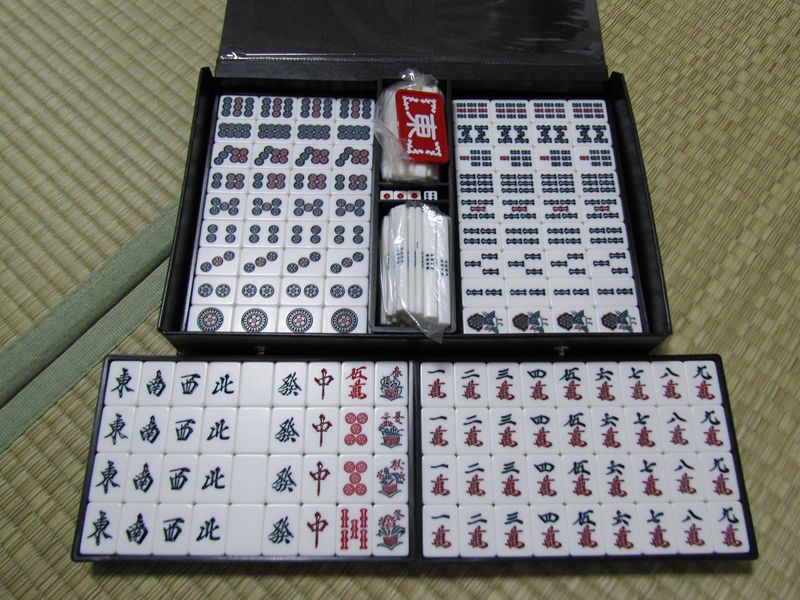
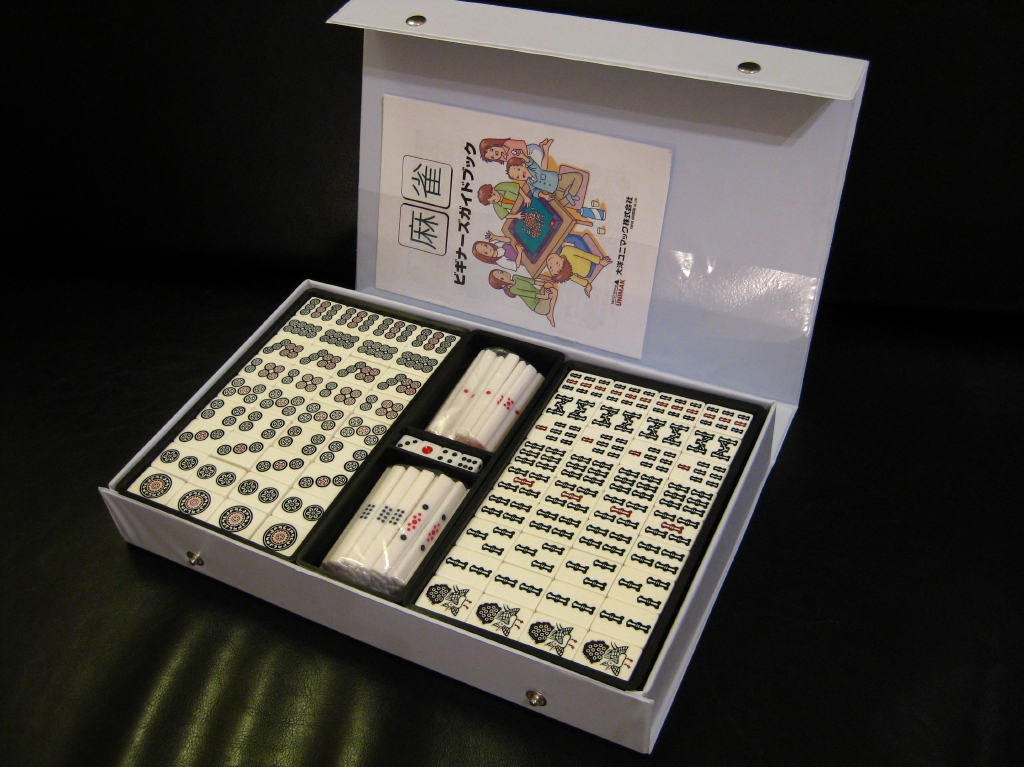
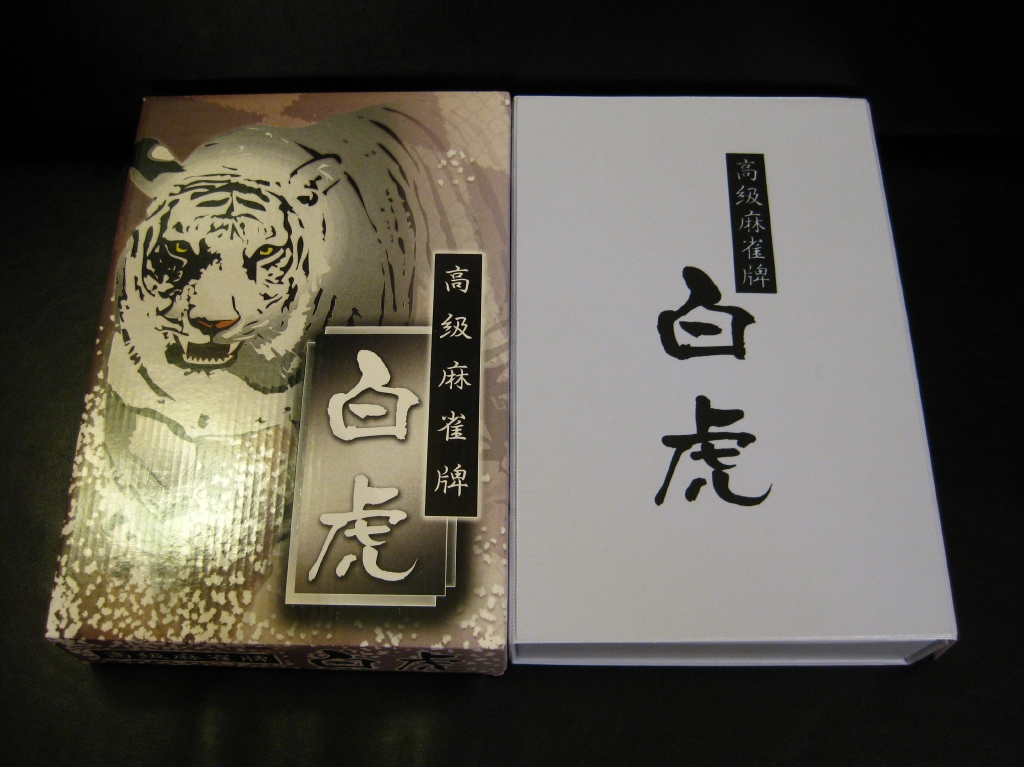
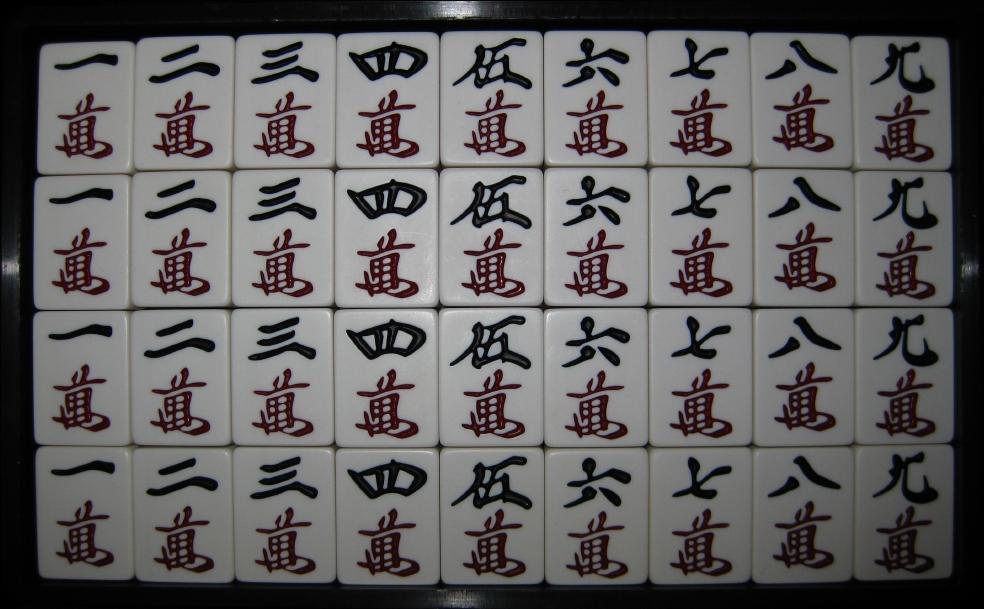
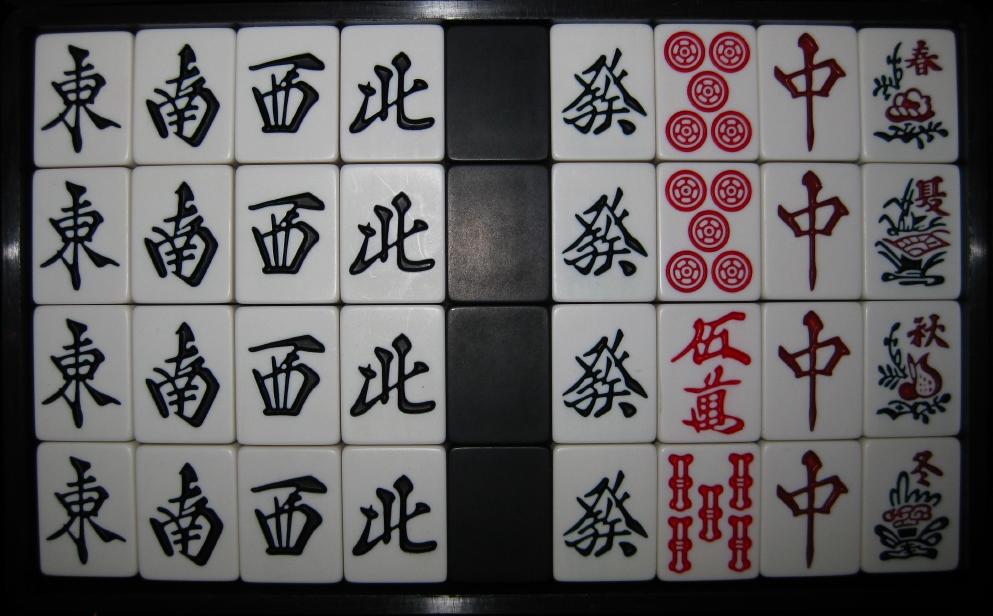
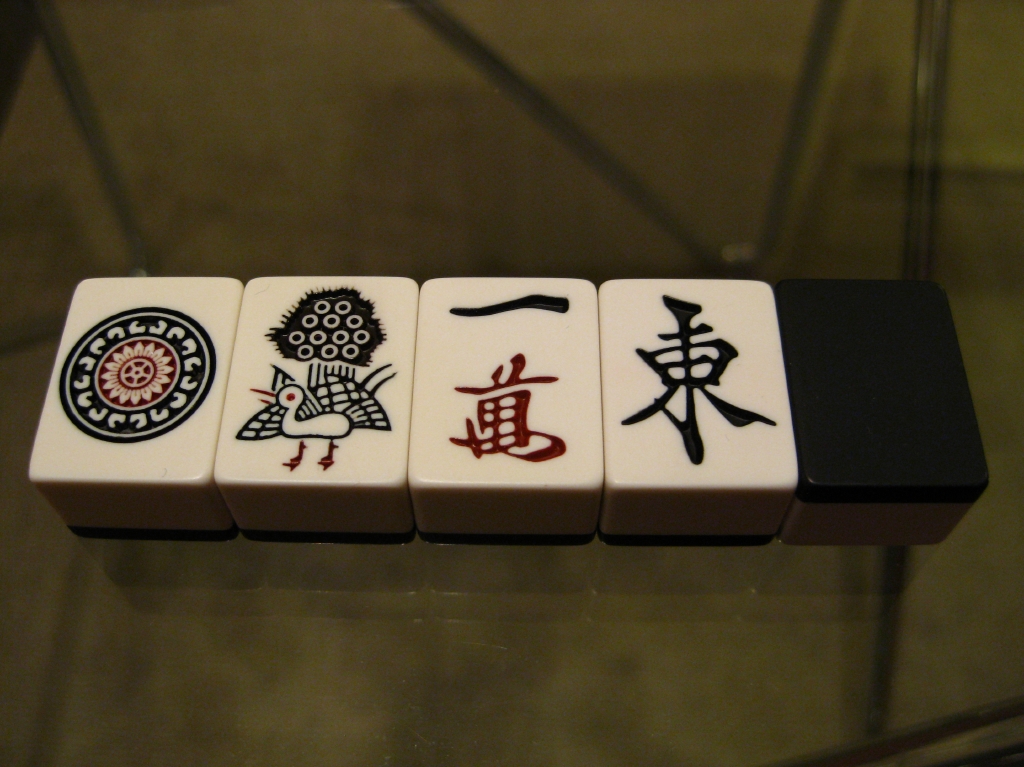
And finally, there was a short-lived set made of recycled PET plastic called Byakko, or White Tiger. It had sharp corners, black backing, and a slight odor similar to acrylic but less pronounced. They are unusual mostly for their matte finish and quartz countertop-like hand feel.
Autotable Models
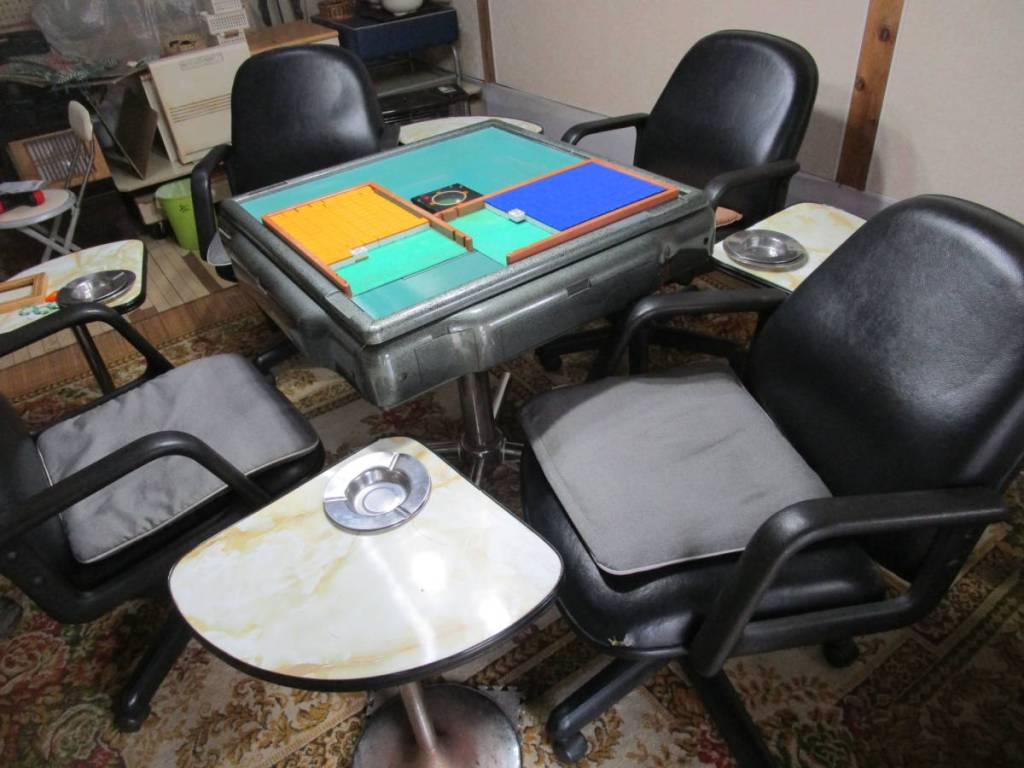
“Old Type” アモス・旧タイプ
AMOS Old Type tiles were 28mm urea resin, bright white, and slightly translucent. (Most noticeable under studio light in 2000s era broadcast tournaments.) They are slightly smaller than AMOS New Type, with more muted colors on the backs.
I was able to piece together the timeline of these early tables thanks to this Youtube video from Takeru Mahjong.
The following table models use these tiles:
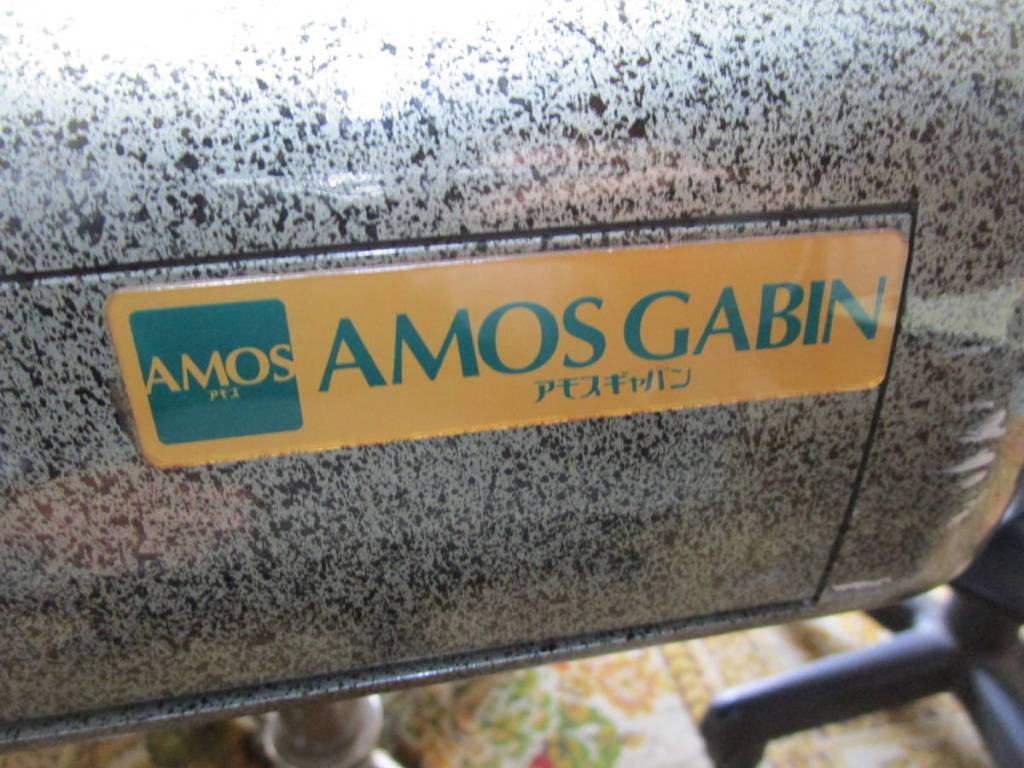
Gabin 「ギャバン」1989
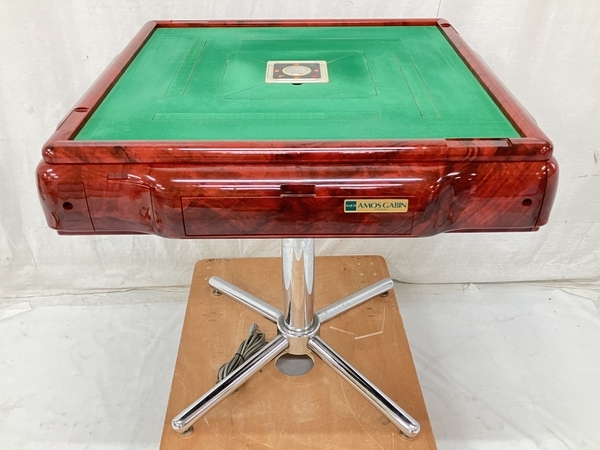
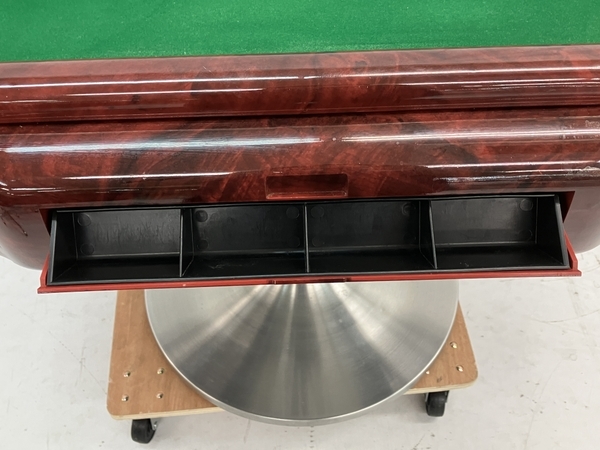
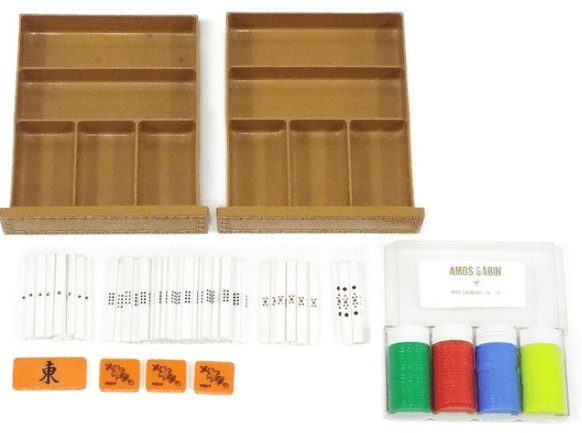
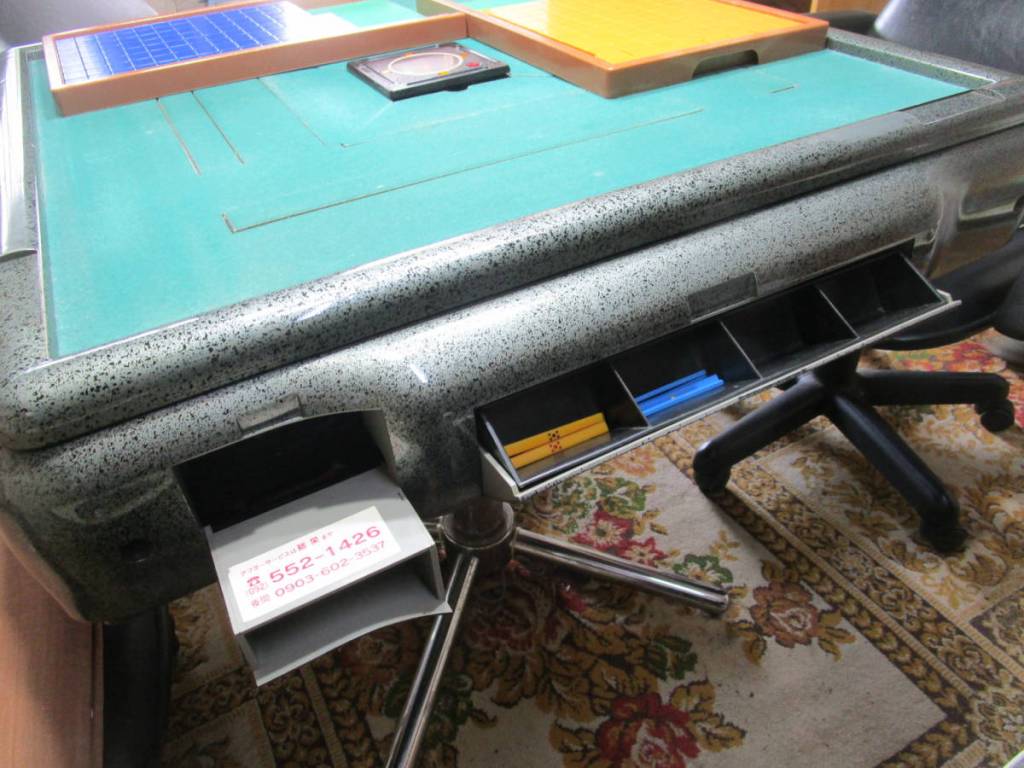
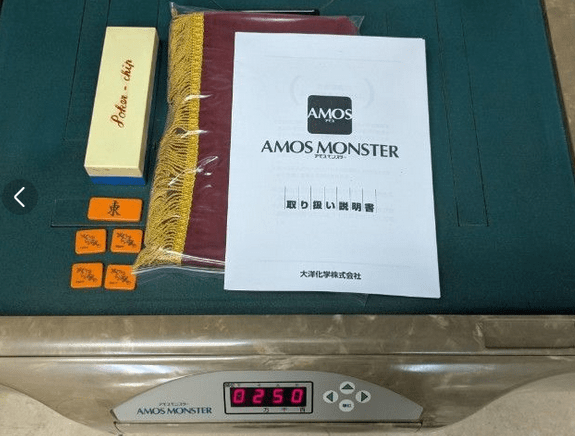
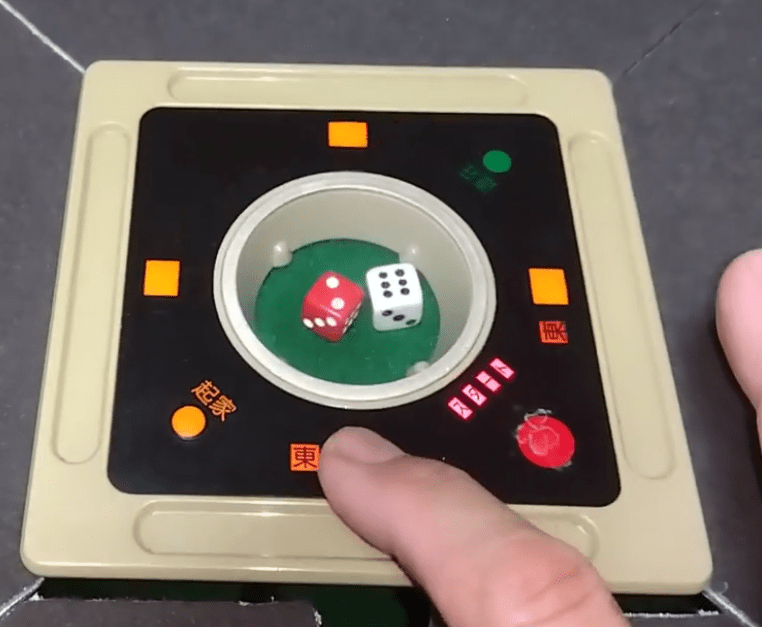
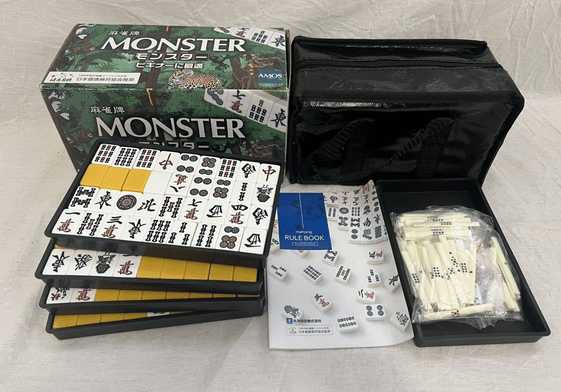
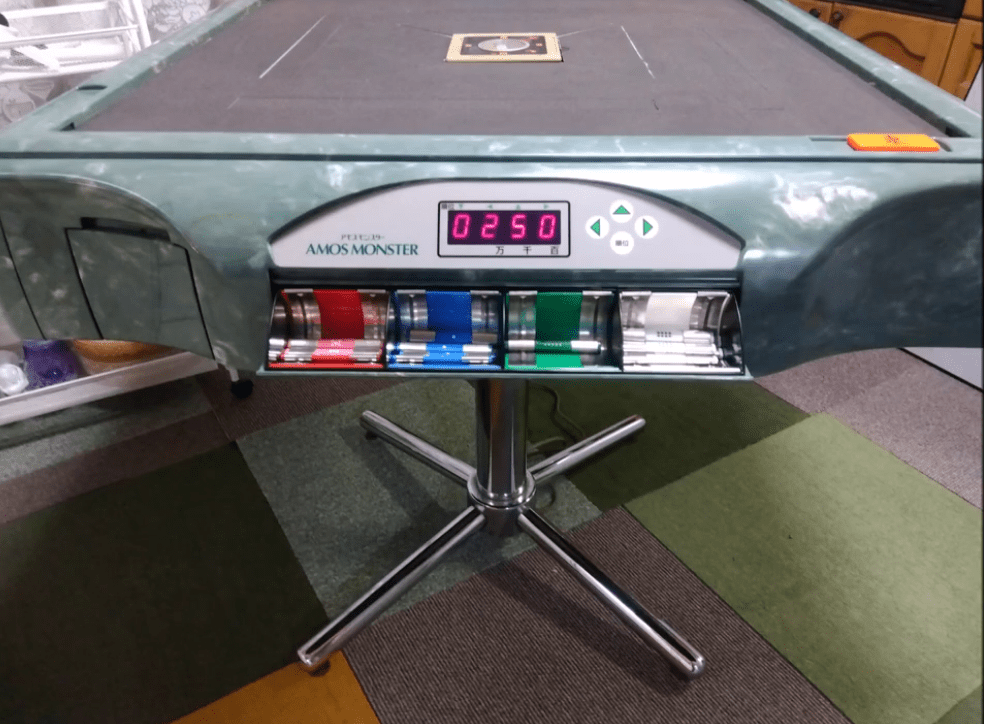
AMOS Monster (モンスター) 1996
The second AMOS table produced. This model added the first point tracking system, using tenbou with thick metal ends. These sticks communicated with an LCD display via metal contact points inside the drawer. These only worked if all point sticks were making contact with the plate, so it could be unreliable. However, it was a big step towards our modern machines.
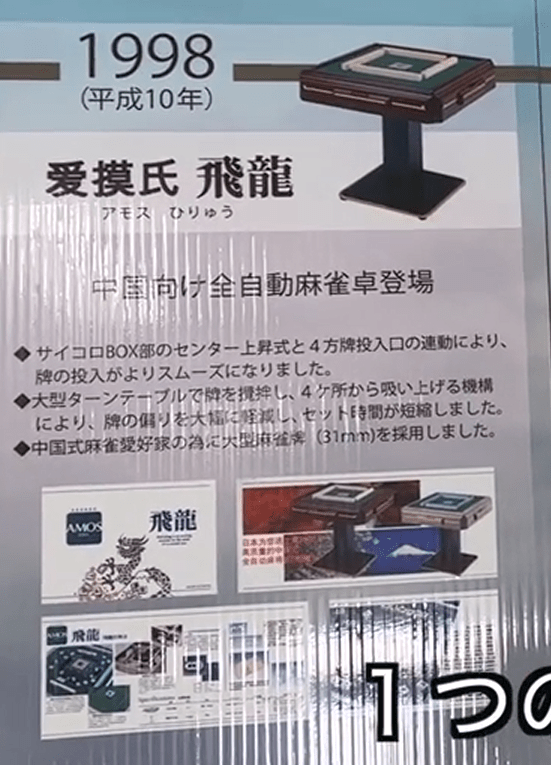
Amos Hiryu “Flying Dragon?” 1998
I have not succeeded in finding any listings for this model online or any photos, just this plaque hidden in the background of Takeru-san’s video. It seems just be a Chinese style table with point stick drawers but no LCD.
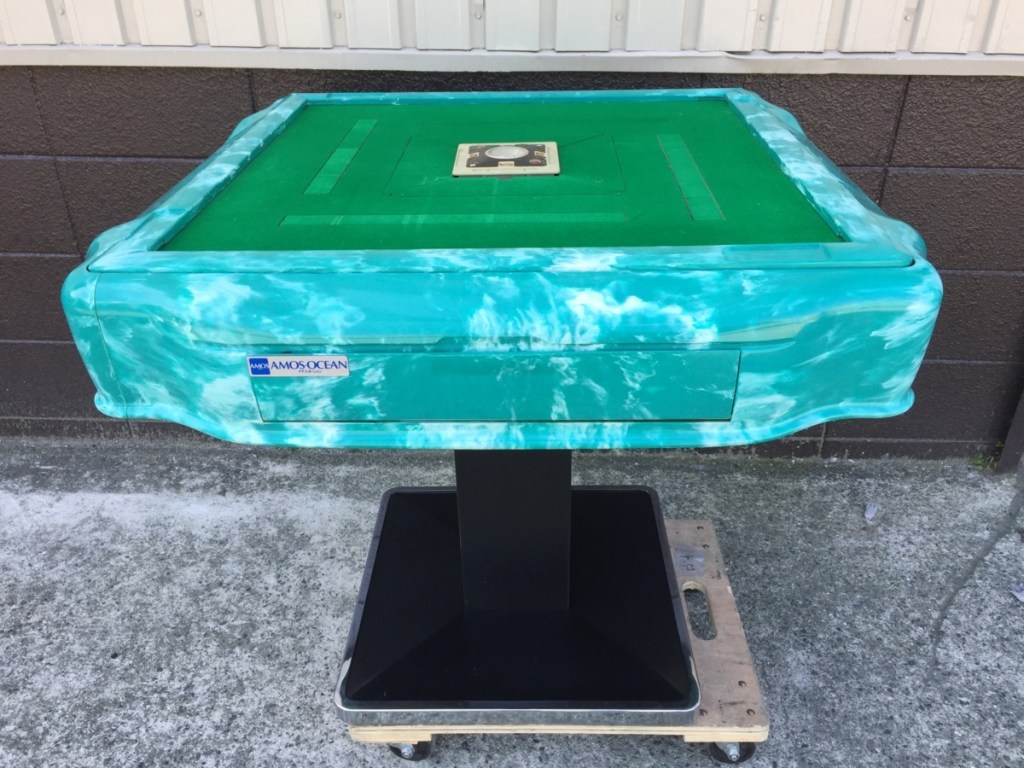
Ocean 「オーシャン」
This model does not appear on the promotional wall, but its lack of LCD suggests it was either a lower priced consumer model, or perhaps a later reprint of the Gabin with more colorful shells.
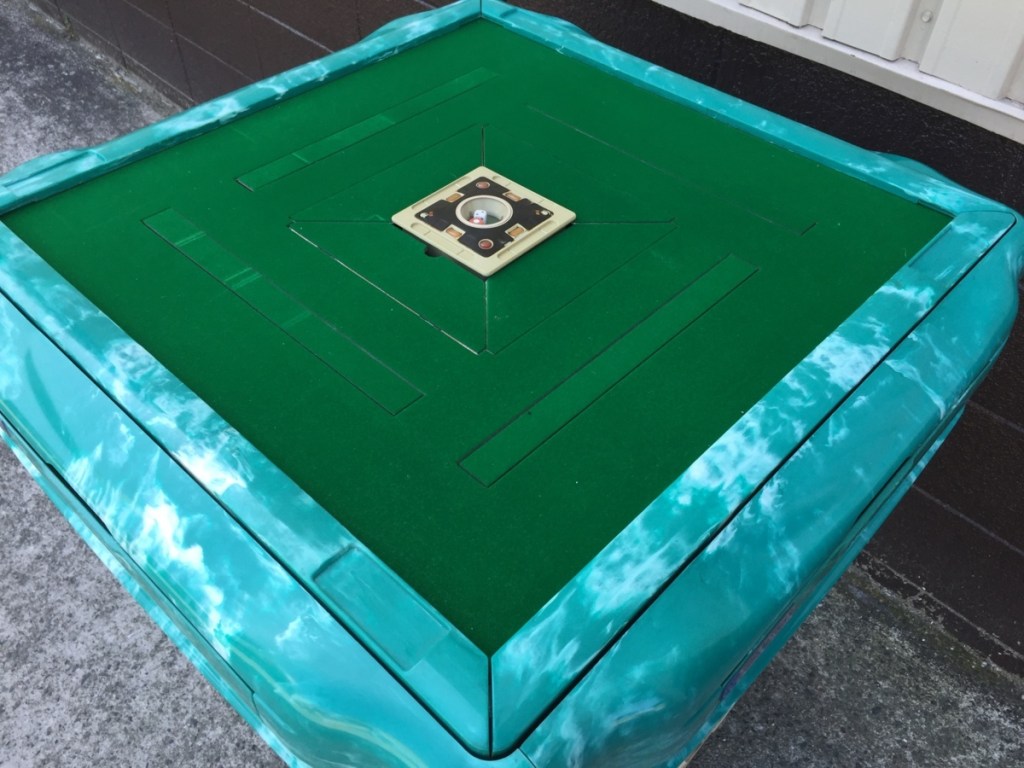
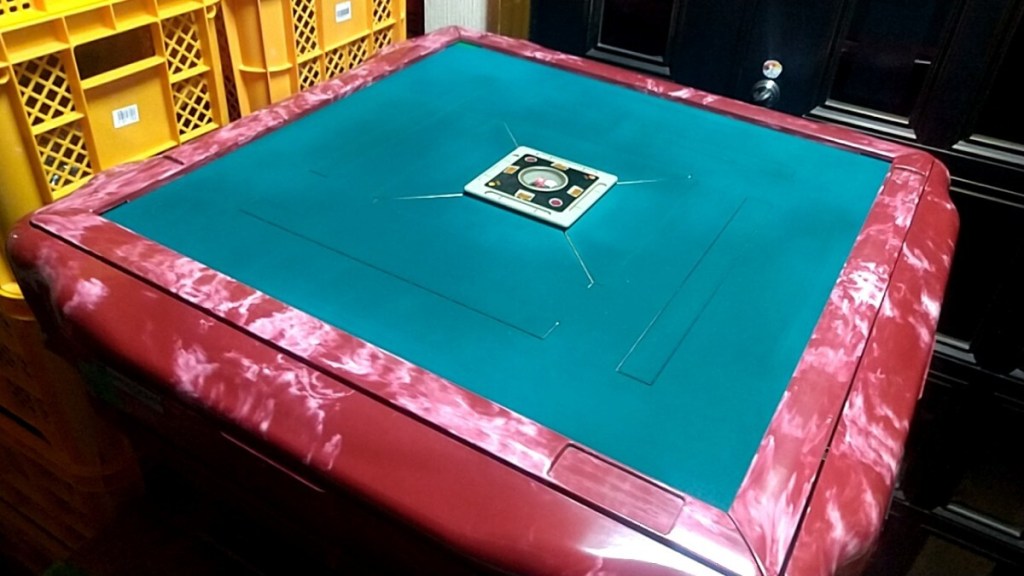
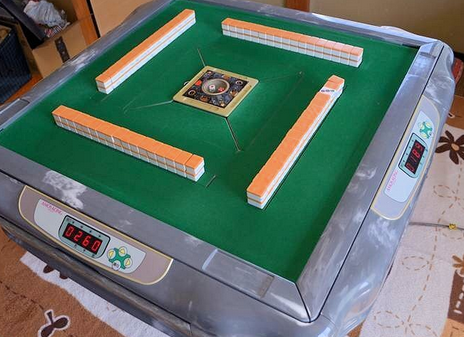
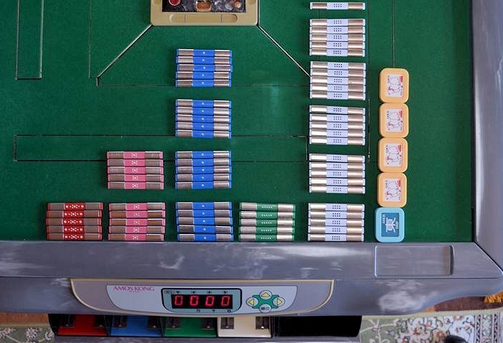
Kong 「コング」1999
The Kong carries forward the LCD point counters from the Monster, but with a slightly redesigned central compass that uses digital buttons instead manual. Personally, I miss those old 90s mechanical buttons. I hope they bring them back!
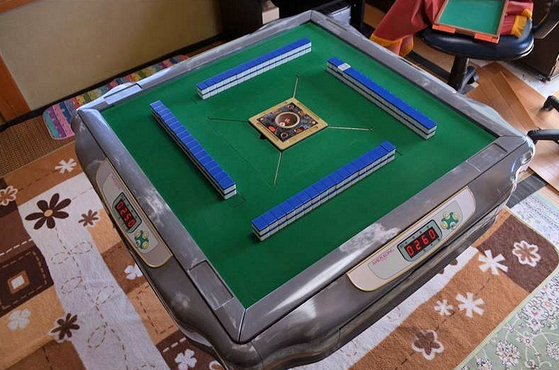
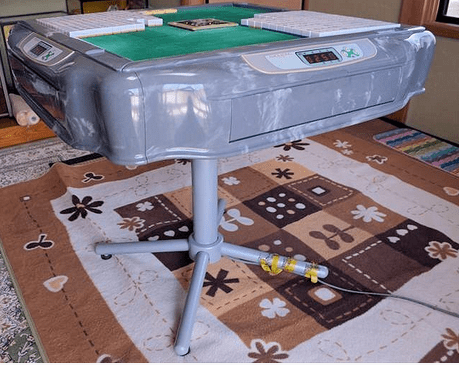
Kong Battle「ゴングバトルフォー」2001
Kong Battle was the first table to show all 4 players scores on the LCD display. Although still stuck on the old tenbou design, these tables are otherwise very sophisticated and don’t feel very different from current machines.
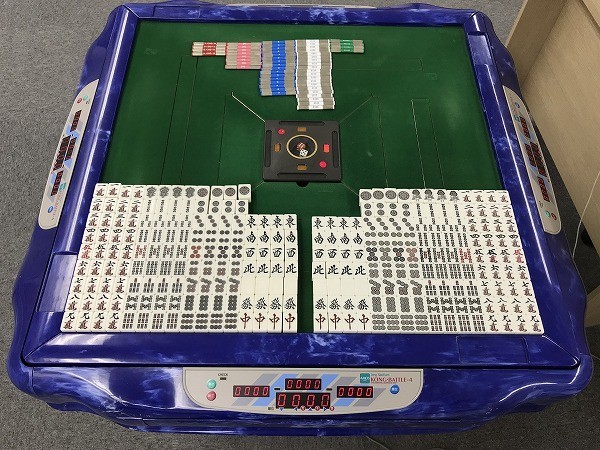
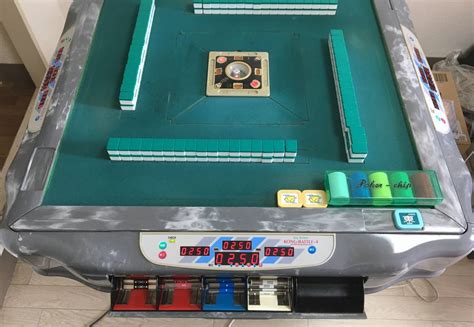
The general distinctions here are the gradual development of point displays and the move from more neutral finishes to flashier colors. All old types feature the trap door style pit, and none of them include auto haipai (pre-dealt hands) or dora flipping.
“New Type” 2000s-2010s
In Kana: アモス・新タイプ
Amos Ultima (アモス・アルティマ) 2005
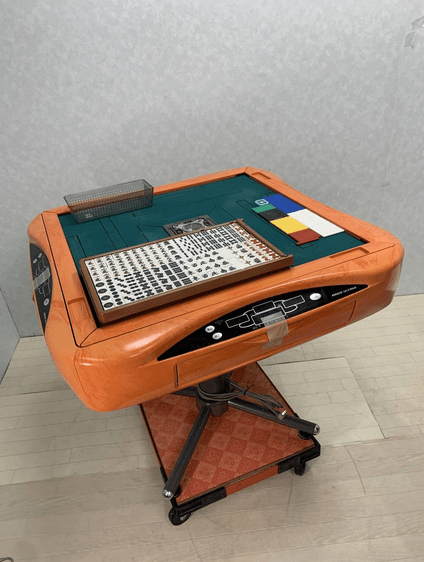
Ultima was the start of the modern autotable. All of the features we now expect were presented together for the first time. Auto haipai, dora flip, honba tracking, and a fully redesigned point stick system utilizing RFID to dynamically track the postiion and sum of the sticks. Came in blue, orange, black, and grey.
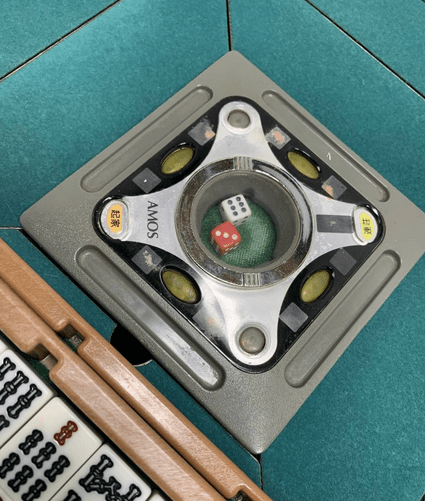
Note the updated center console, which set the visual style that AMOS hand shuffle compasses still mimic today.
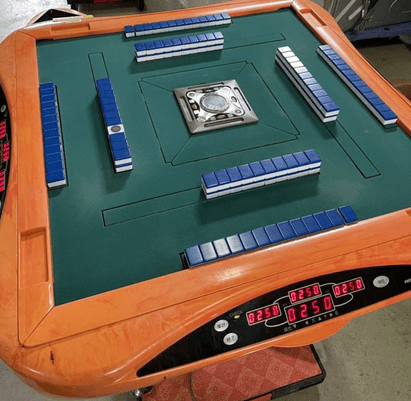
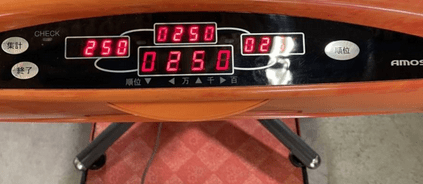
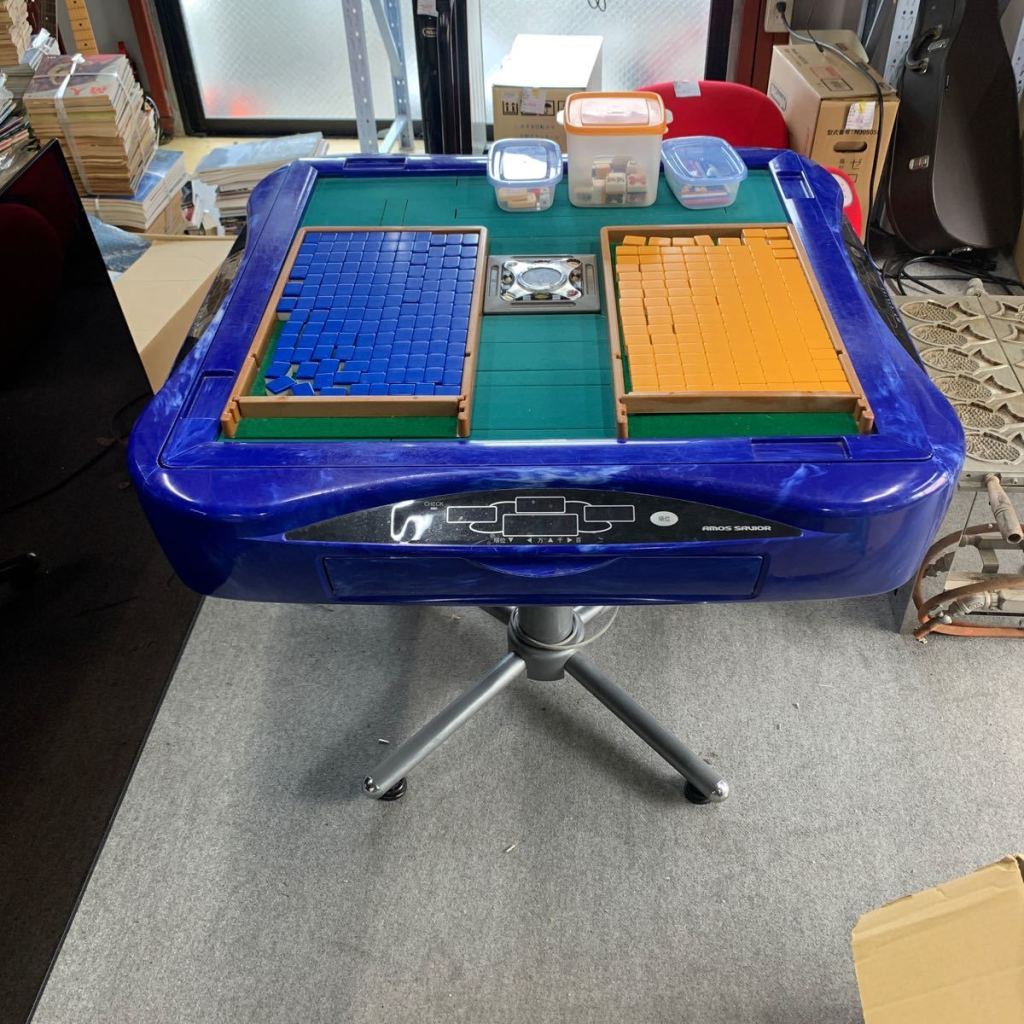
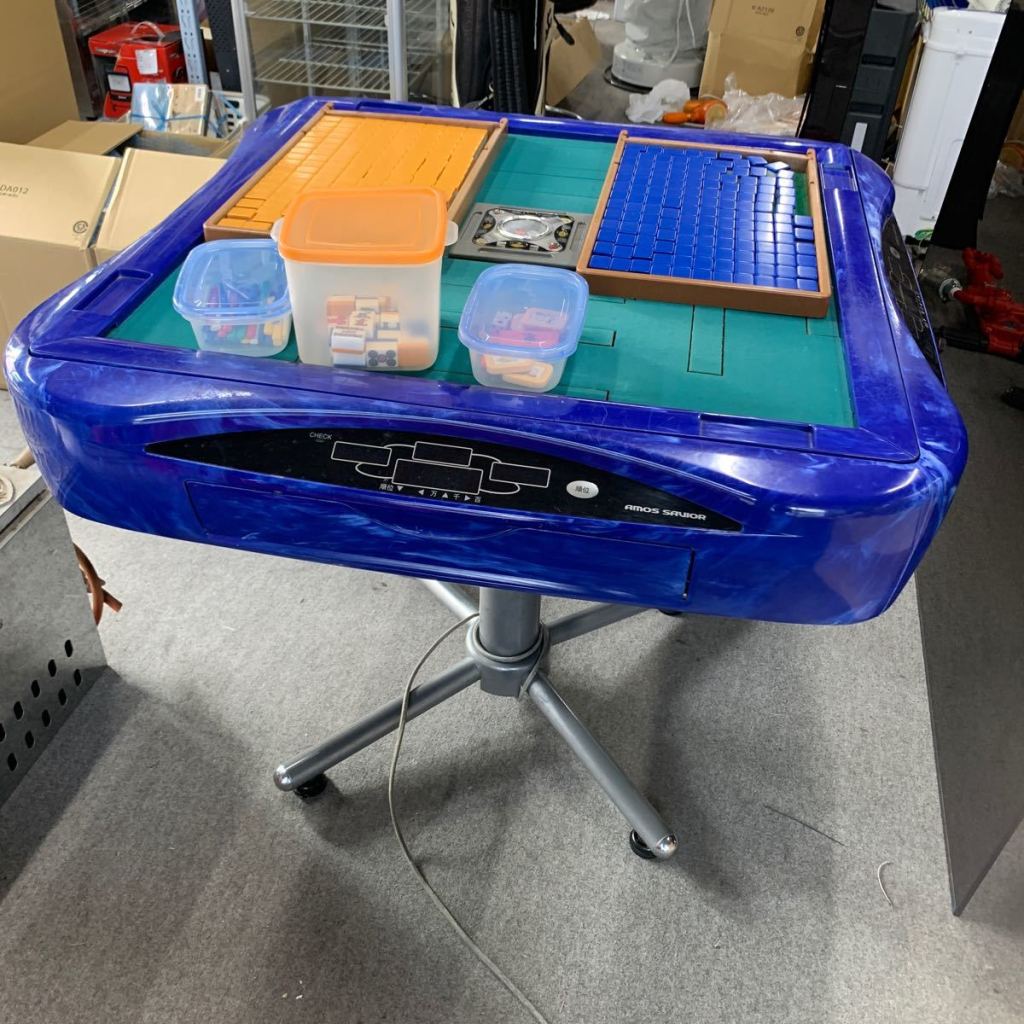
Amos Savior (アモス・セヴィア)
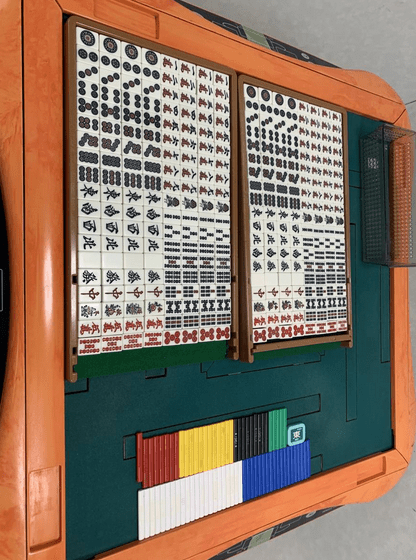
A lower price tier that seems to use the same outer shell as Ultima, but without auto haipai. Available in blue, orange, black, and grey also.
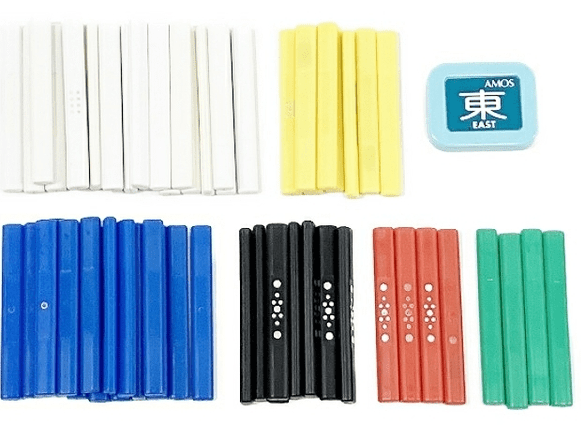
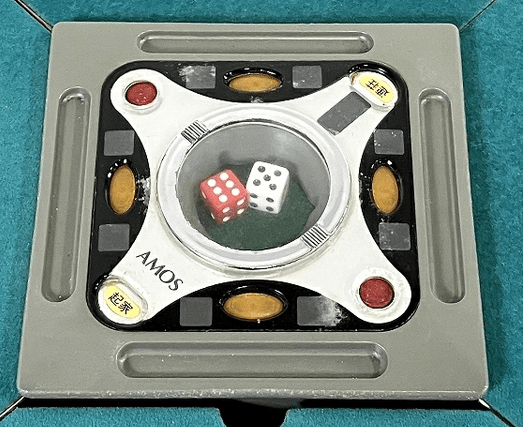
AMOS Mater 「マーテル」2008
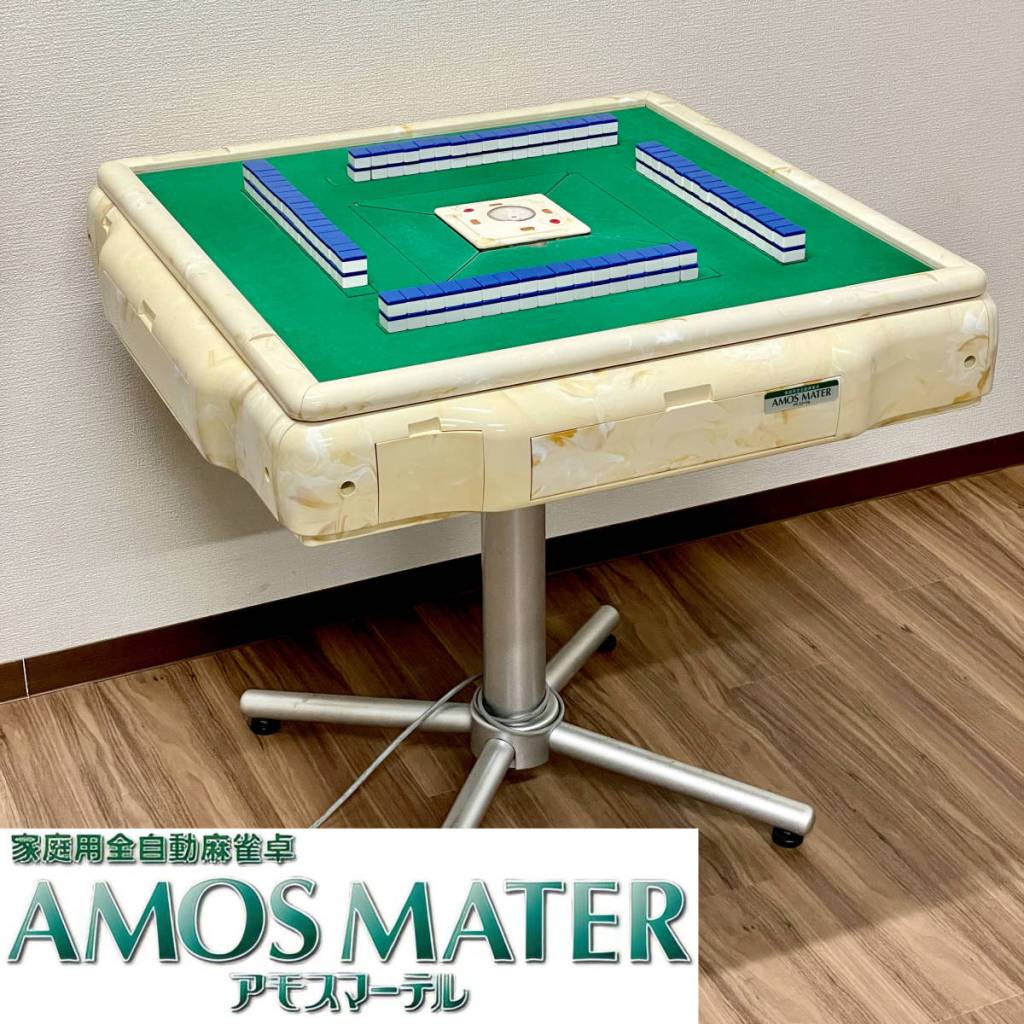
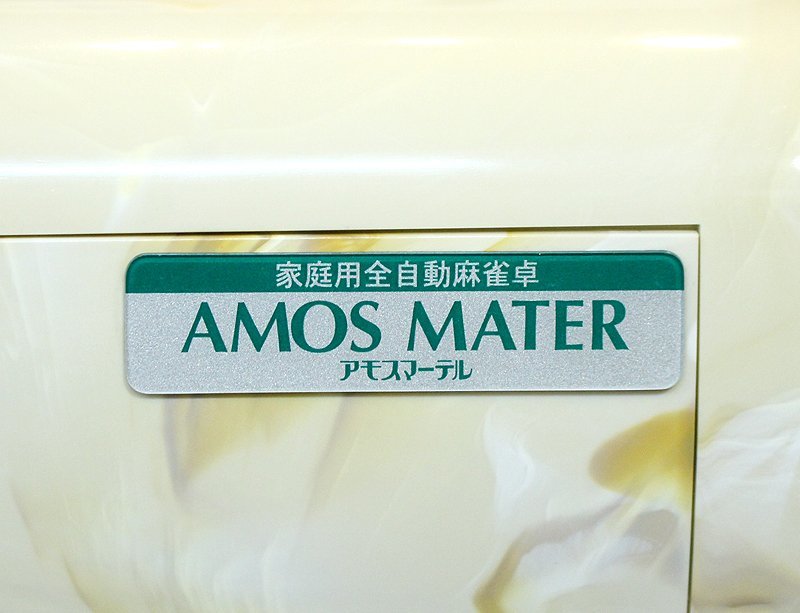
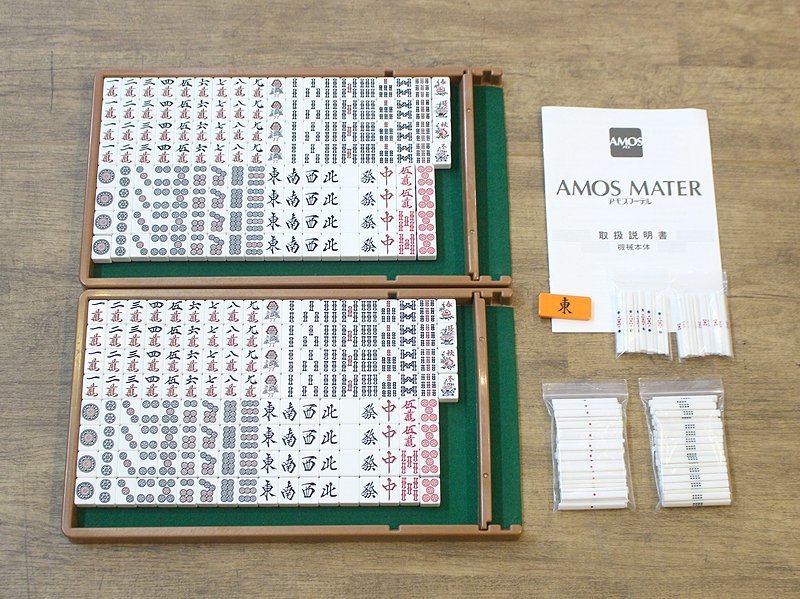
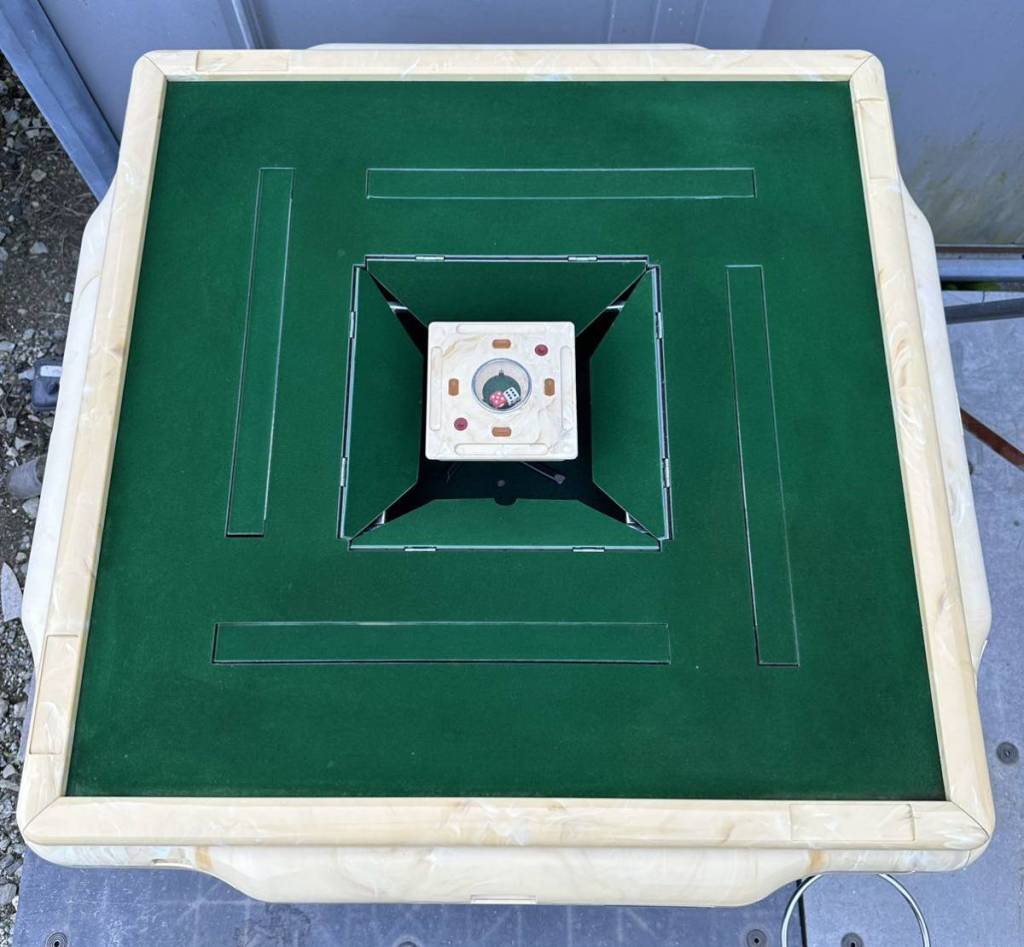
The Mater seems to be AMOS first attempt at a low-cost home table. Stripped back to basics with analog point sticks and a simple push botton compass, it never the less went on the market at 145,000 yen, or around $1000 today. Sounds pricey, but compared to the Ultima priced at 400,000 yen in 2008, it remarkably affordable.
Amos Cube (アモス・キューブ)
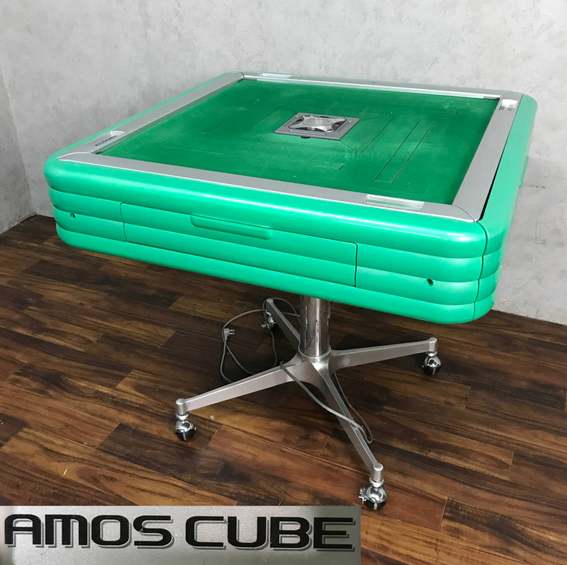
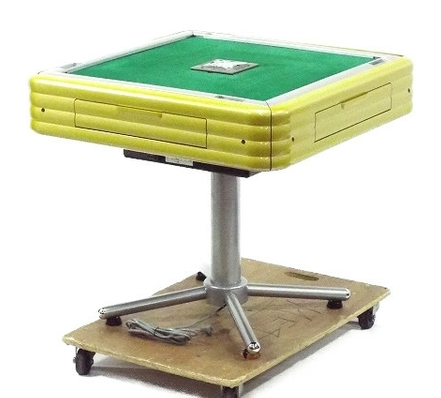
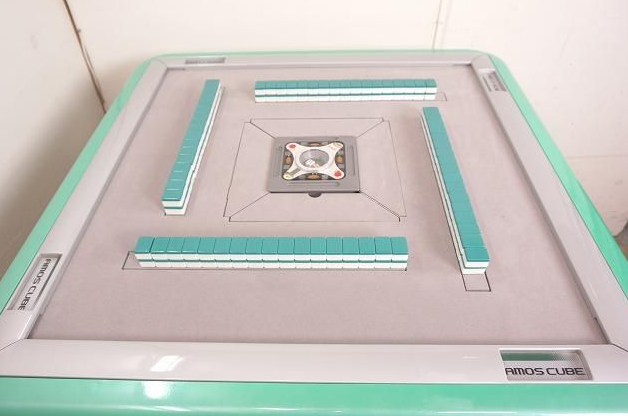
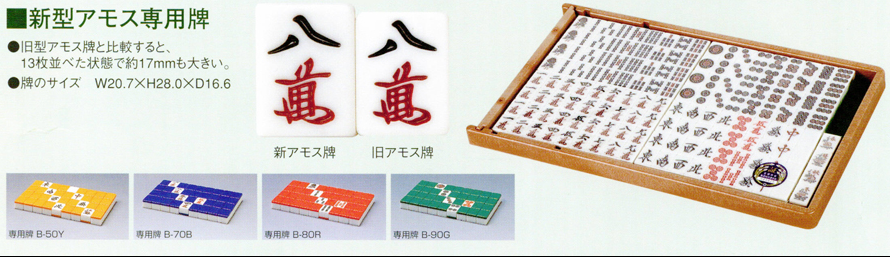
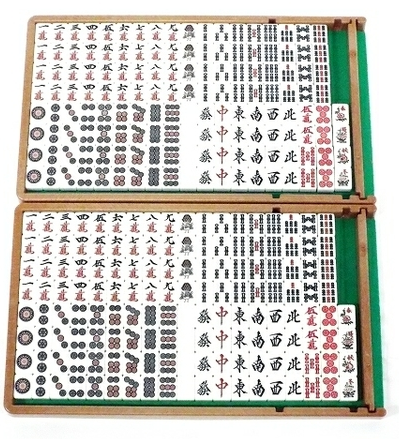
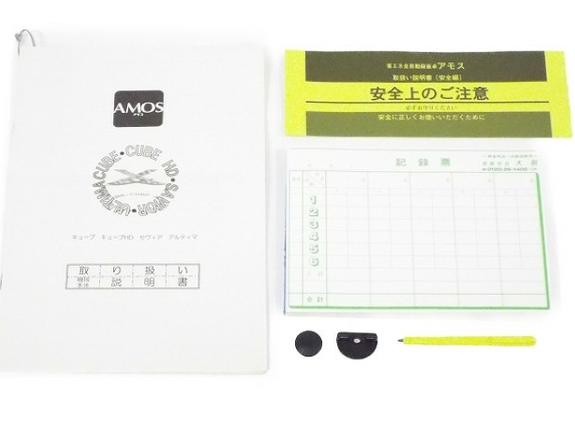
This quirky model seems to have been the budget table of the era, with no point display and standard white tenbou. Note the old ad for yellow, blue, orange, and teal backed tiles. I’ve also seen photos on a Cube table with light pink backed tiles, so I’m assuming this is the era that gave us those rarely seen pink and purple autotable tiles.
The Alban Era, 2010s-Present
Somewhere in the 2010s, Taiyou Giken partnered with a company called Alban. Players have noticed over the years that Alban tables closely resemble the tables of a Chinese company called Treyo. According to this Reddit comment they share a parent company in China called Matsuoka Mechatronics Ltd. Co. Sound familiar?
My theory is that Taiyo Giken and Matsuoka lost their desire to compete for the same market and created a joint venture to sell Matsuoka tables packaged with AMOS tiles under the brand name Alban. So as not to confuse consumers, Matsuoka retired the Century line of tables, moved all Japanese tables over to Alban/AMOS, and created Treyo to be the new provider of their non-riichi tables.
But that’s just my guess based on the coincidence of Matsuoka tables disappearing around the same time that Alban appeared and started producing tables for AMOS.
Anyway, the defining product that begins this new era is the introduction of the AMOS Rex line.
AMOS Rex (アモス レックス) 2014
As with previous eras, AMOS tends to create one model with all the latest features at an ultra high price point and highly durable materials, intended for commercial use. From there, they make high-end consumer model, and a budget model.
The AMOS Rex is the commercial table of the current era.
These are still very much in use today, and I was not able to find a single resale listing of a 1st Generation Rex at this time. Kinda wild. So, I can’t say which features it has for sure, but given that the Ultima had RFID tenbou and auto haipai/dora reveal, I am assuming that the Rex would have those too.
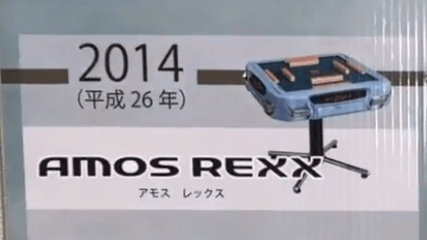
AMOS Charme 2014
AMOS Charme appears to be a stripped down version of the Rex. With similar color and shape, but no auto haipai and no point counter.
AMOS Joy (アモスジョイ)
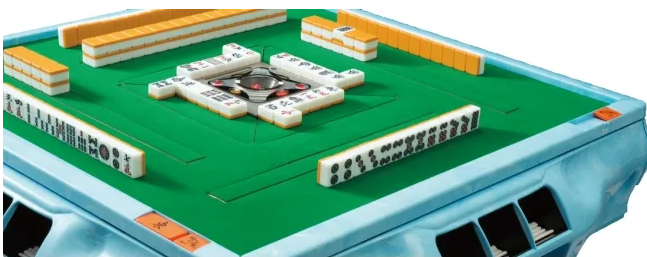
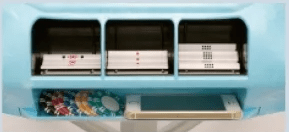
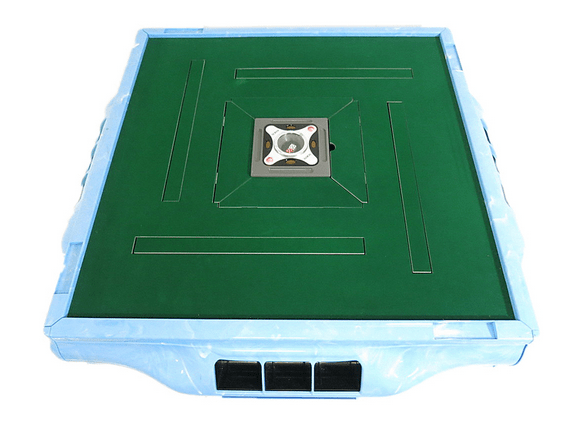
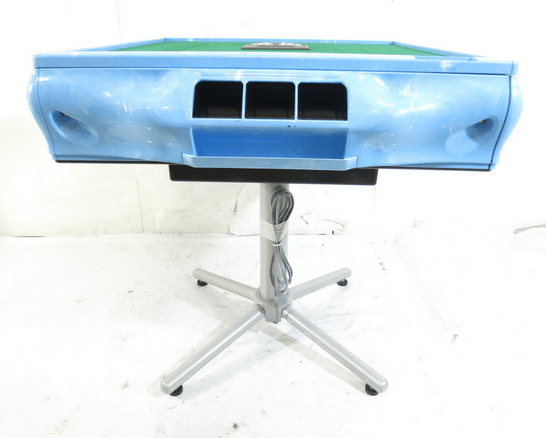
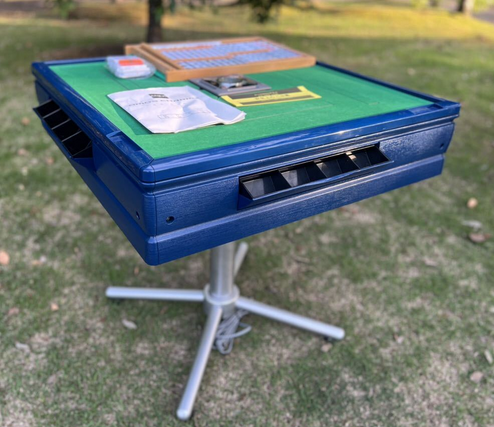
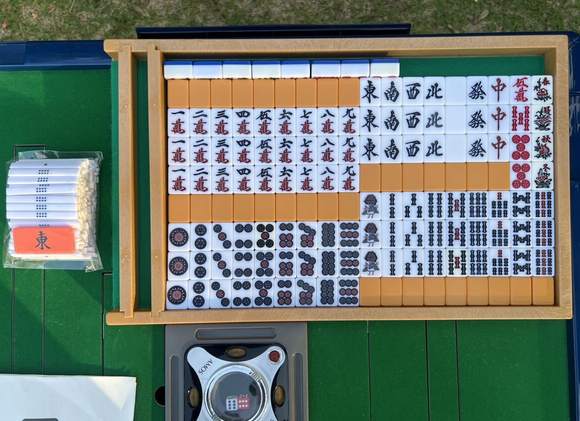
AMOS Joy is a seldom talked about model, but appears to be their attempt at a compact, affordable table. It has no auto haipai or dora flip, but that’s not exactly expected from the budget model. I find myself charmed by the rich blue color, even if some of the materials look cheap.

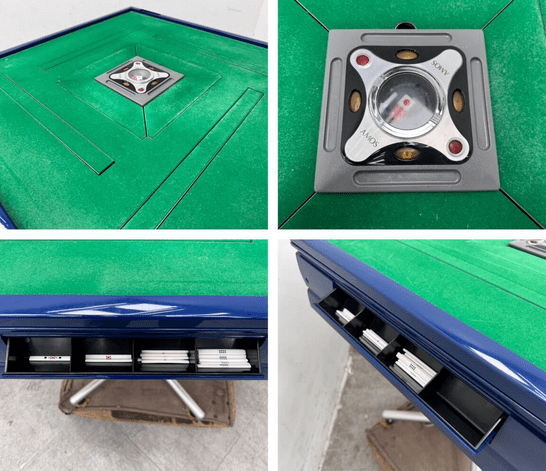
AMOS Vieral (アモスヴィエラ) 2015
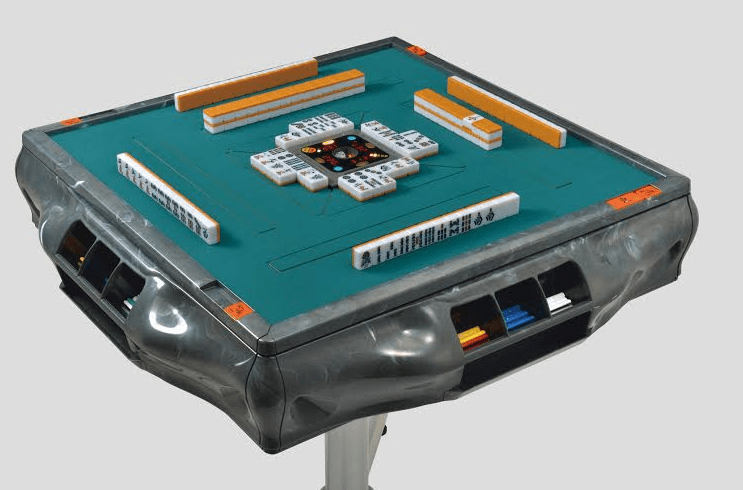
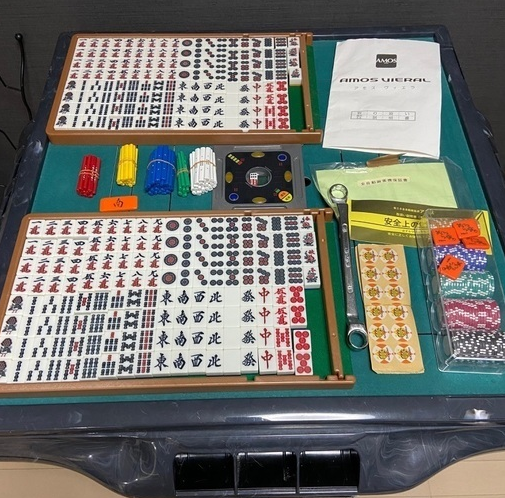
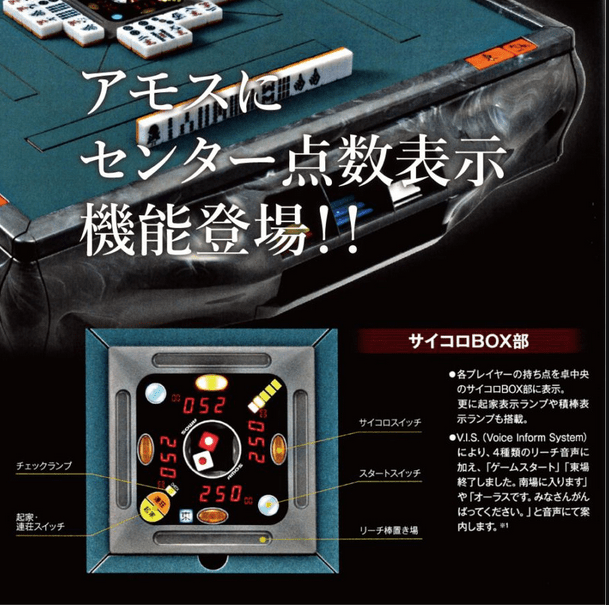
The Vieral is an interesting model in which AMOS experimented with cost saving by moving the LCD displays to the central compass. It seems to have been a limited release, as I’ve only ever seen it in marbled grey. The removal of the LCDs from the tenbou tray does give the table a sleekness and simplicity that I think is quite nice.
I also think this table is the inspiration for the Mahjong Soul and Riichi City UI, which shows all four players’ scores on the compass in the same configuration.
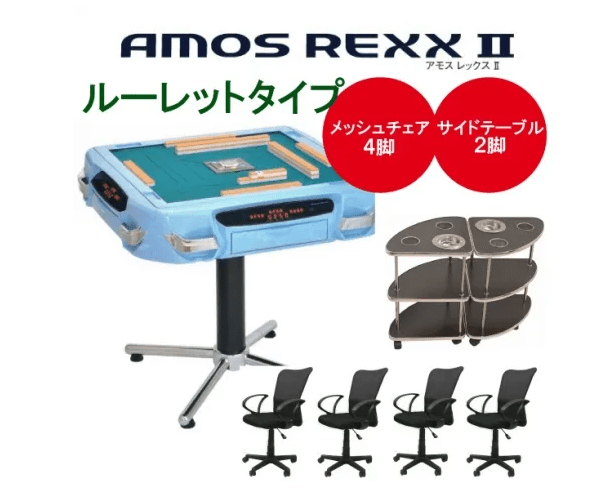
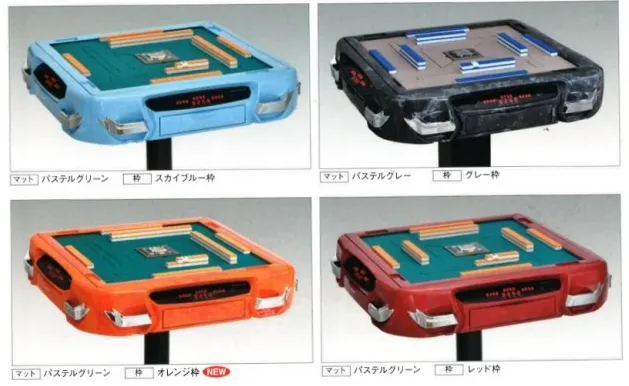
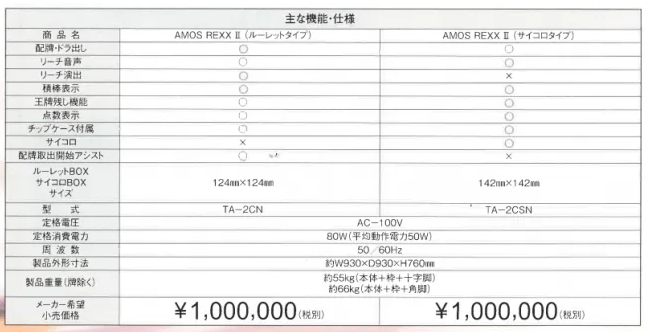
AMOS Rex II (アモス レックスII) 2016
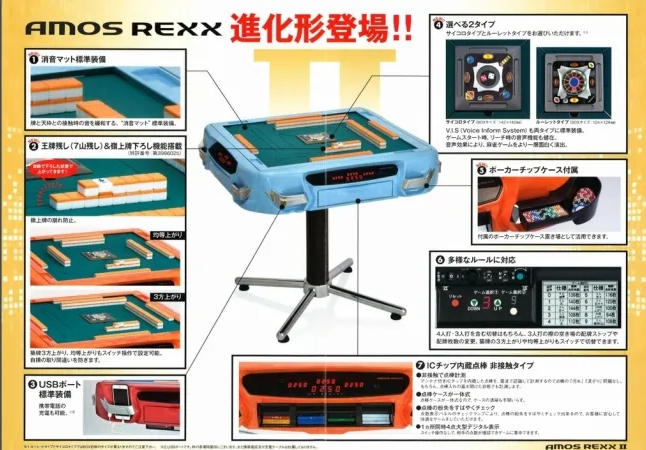
Released just two years later, the Rex II is very similar to Rex I, except that the internal computer is more sophisticated. Previous auto dora systems like the Kong Battle and Ultima chose which wall to break randomly. With Rex II, the table instead was able to identify the number rolled by the dice, and calculate based on the dealer’s position which wall was supposed to be broken. Pretty neat.
It being released during the mass adoption of smart phones, it also has a pocket to store your phone and other items, as well as a slot to quickly deposit tenbou into the drawer without opening it. (Although I believe the tenbou slot was also present in the previous generation.)
AMOS JP 2017-Present
The main consumer line of tables currently in production with a variety of trim levels. We will go from lowest to highest.
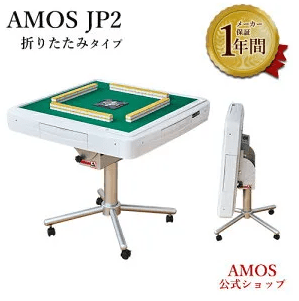
AMOS JP/JP2
Sold in the US under the name “AMOS Riichi Style” by Mahjong Stars.
JP2 is just a later re-issue of the same table, so don’t worry about the model number too much. This is a basic home model with analog sticks and no point display. Intended to be smaller and quieter, with a tabletop the folds vertically for storage. Specifically designed to hold both sets inside safely even while folded.
AMOS JP DG / EX Color
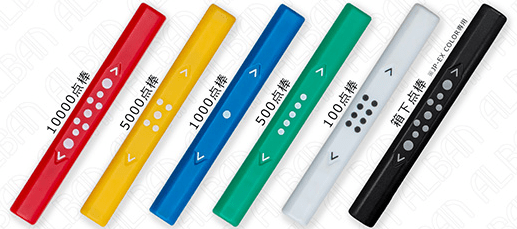
The AMOS JP is an experiment with fully digital score keeping. The DG model incorporates a series of buttons that you use to pay other players digitally with no tenbou (point sticks) at all. The EX Color model is the same, but with a higher resolution, multi color screen. Comes in white and black.
The JP EX Color was the first set to be sold with black debt tenbou, and was programmed to allow players to go into debt.
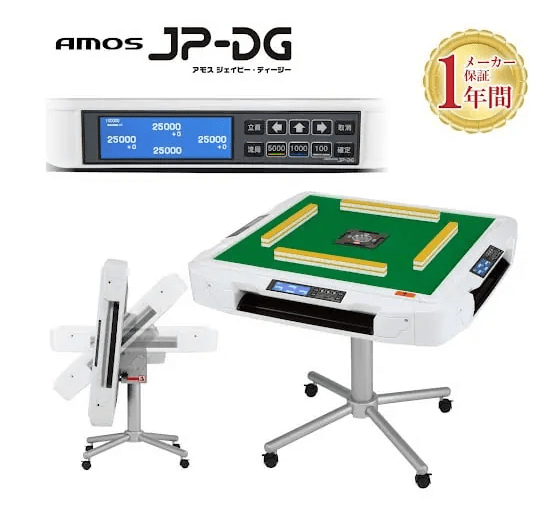
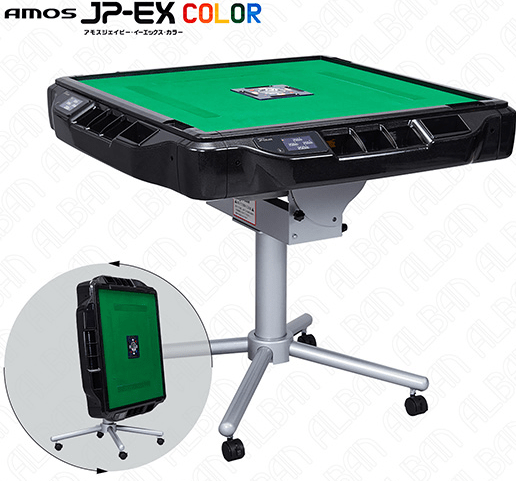
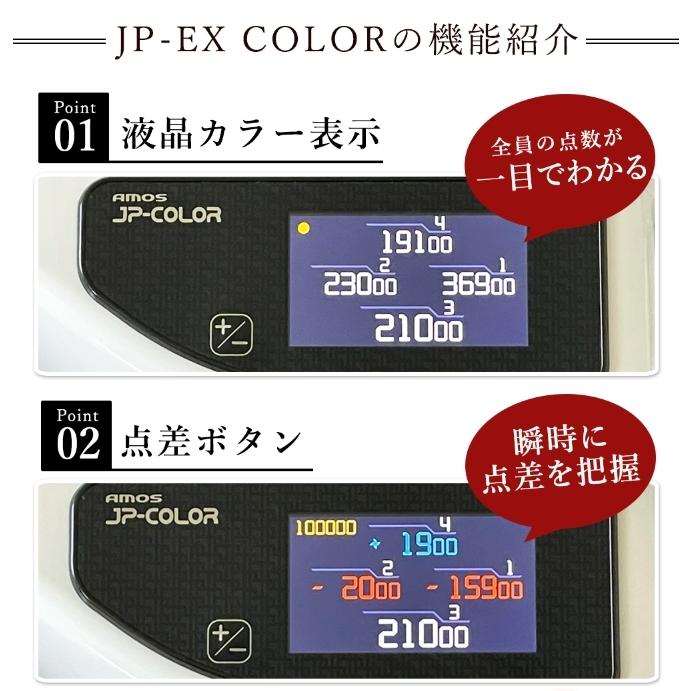
the DG models have a lower tray to store your phone, which can be swapped to a conventional point stick drawer for tenbou loyalists. The color has built in tenbou drawers.
Both models abandon the traditional “trap door” tile pit in favor of a new design. On these tables, the compass is attached to a hidden mast which rises when the player hits the button, revealing a hole for players to dump tiles into.
White this design involved fewer parts and is likely to last longer under heavy use, I personally feel that some magic is lost without the trap doors. Also, the hole is rather small and players have to take care not to overload the opening by pushing tiles in all at once.
Both models were sold for 28mm and 30mm tiles, but the 28mm is much more common.
A slightly redesigned model of these two tables is sold in the US. The DG equivalent is “AMOS Riichi Style EX” and the EX Color is sold as “AMOS Riichi Style HD.” I believe both support auto haipai and dora flip.
AMOS Rexx III (アモス レックスIII)
The current top of the line table. Honestly hard to imagine they can get better from here. The only thing I can think of is rotating wind indicators on the compass. Everything else has been thought of.
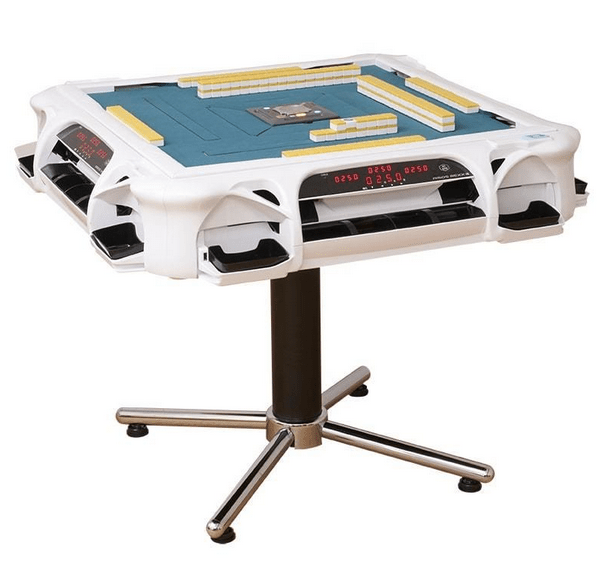
Fully automatic, trap door design. Auto haipai, auto dora, dealer’s first draw is included in their starting hard, and all tiles are dealt right side up. RFID point sticks return, now with the black debt stick programmed in, and digital displays of all four player’s scores on all four sides.
Comes in black, white, orange, and green. Pretty sweet table if you’re made of money. 28mm tiles only, if I’m not mistaken.
And that’s all…. for now, at least!
Buckle V.
 Massachusetts Riichi Mahjong Society